What are shift tasks?
You can now attach a checklist to any shift on the roster. With shift tasks, staff see exactly what needs doing on site — an opening or closing run-sheet, a cleaning schedule, or a compliance check — and you get proof it got done.
Instead of relying on printed checklists, group chats, or a verbal "did you remember to…?", shift tasks put the checklist inside the shift itself. Staff open their shift in the RosterElf mobile app and tick items off as they go. Each item can require a photo or a note, giving you a timestamped record rather than an assumption.
Why shift tasks matter
Every shift has a routine — the things that have to happen for the site to open, run and close properly. When those steps live in someone's head or on a laminated sheet by the door, they get missed, and you often only find out when a customer complains or an audit fails. Shift tasks make the routine visible, trackable and provable.
Consistency across sites
Build a checklist once and apply it to every relevant shift, so the same standard is met whoever is working.
Proof of completion
Require a photo or note on any item and get a timestamped record — not a verbal assurance that it was handled.
Less supervision
Staff know exactly what's expected without a manager on site, freeing you to run the business rather than chase run-sheets.
How shift tasks work
Shift tasks have two sides: managers build the checklist, and staff complete it on their shift.
Manager side: build a checklist template
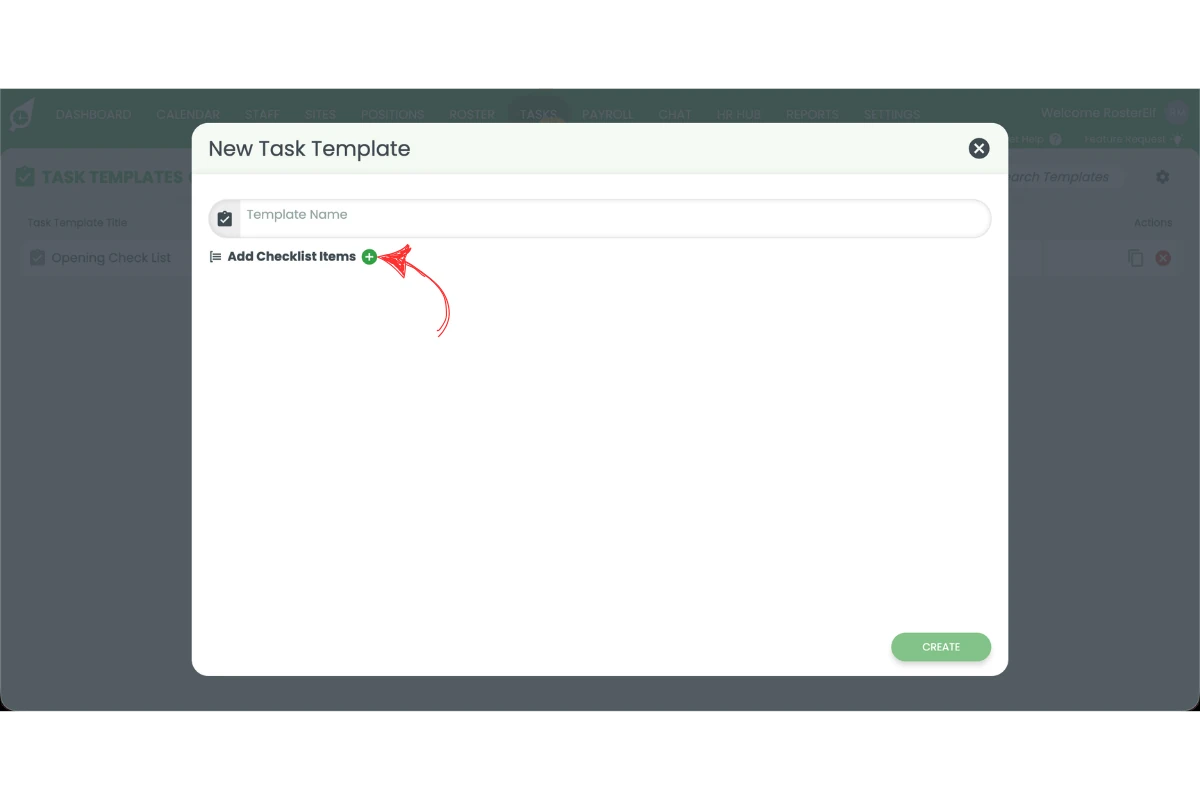
Turn shift tasks on in Settings, then open Tasks and create a template. Give it a name (for example "Cafe opening checklist"), add each item, and choose whether an item requires a photo or a note. You can drag items to reorder them, and duplicate a whole template to reuse it across sites — the full walkthrough is in our getting started with shift tasks guide.
Staff side: complete tasks on shift
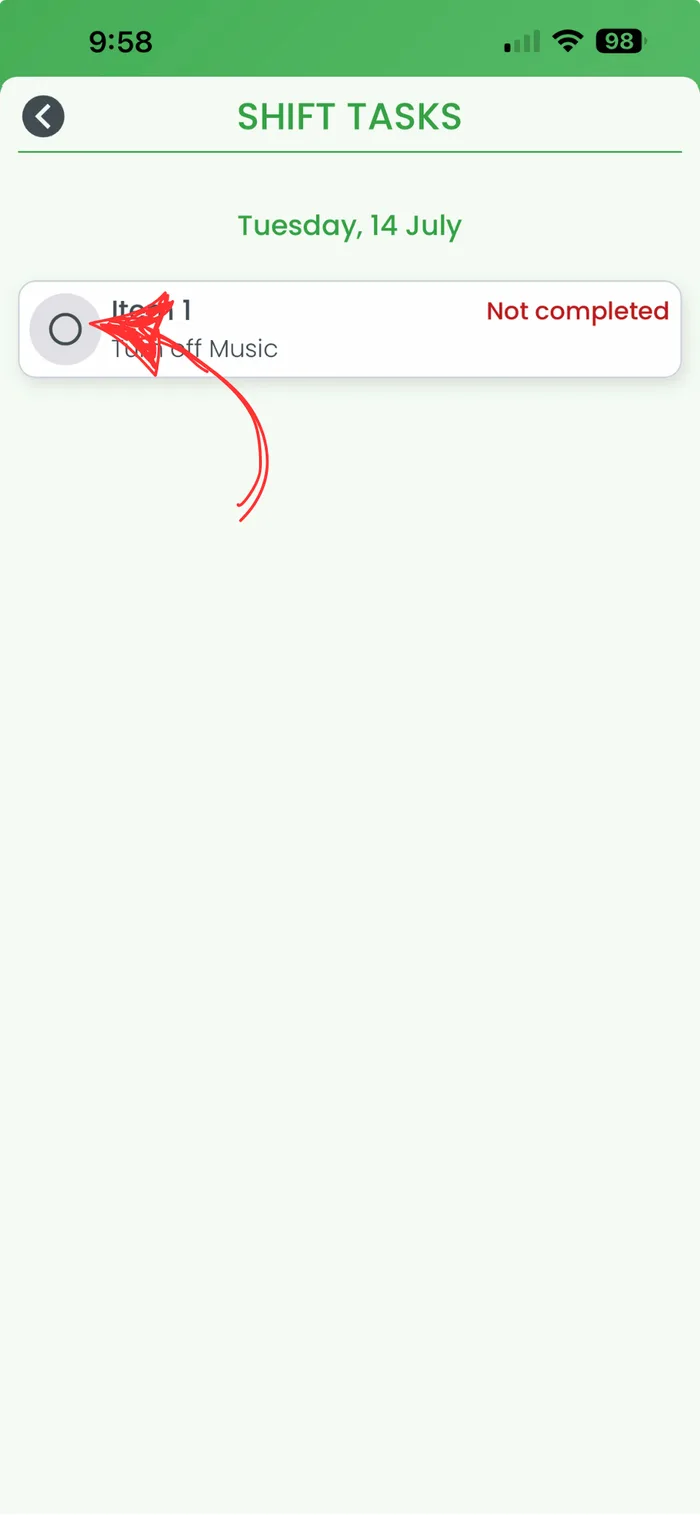
When their shift starts, staff open it and see the checklist. They tick each item off as they complete it — attaching a photo or note where required — on their own phone in the RosterElf mobile app, or on a shared-site Timeclock app where they select themselves and confirm with their PIN.
Photos and notes as proof
The difference between a checklist and a compliance record is proof. On any checklist item you can require a photo (a clean prep bench, a locked door, a temperature reading) or a note (a reading, a count, an explanation). Staff can't mark the item complete until they attach it, so you get a timestamped, attributable record of what was done and when.
That record is invaluable for food-safety and WHS checks, security closedowns, and any situation where "we did it" needs to be more than a verbal assurance. It also pairs naturally with shift notes, which capture freeform comments at clock-in and clock-out.
When to use shift tasks
Opening and closing run-sheets
Hospitality and retail sites run on opening and closing routines. Attach a checklist to the first and last shift of the day so nothing — from switching on equipment to cashing up and locking doors — gets skipped, whoever is rostered.
Cleaning and compliance schedules
Cleaning, food-safety and WHS checks need a paper trail. Require photos on the items that matter and you have a defensible record for audits — without chasing staff for confirmation after the fact.
Multi-site and franchise consistency
If you run several venues, duplicate a template across sites so every location works to the same standard. Managers see completion at a glance instead of visiting each site to check.
How to get started with shift tasks
Shift tasks are part of RosterElf's rostering software and take a few minutes to set up. Turn Tasks on in Settings, build your first checklist template, and apply it to a shift. Staff will see it the moment their shift starts.
Ready to try shift tasks?
See the full shift tasks feature overview, then follow our step-by-step guides for managers and staff: