Most HRIS comparisons rank vendors without saying how, and quietly place the publisher first. This one states the method, shows where each platform fails an Australian business, and says
plainly where RosterElf is the wrong choice.
Looking for HR software rather than an HRIS? If your shortlist is really about rostering, time and attendance and getting hours to payroll, read our comparison of HR software for Australian small business instead. This guide scores platforms on the HRIS job: employee records, documents and compliance.
There is no single best HRIS in Australia — the right one depends on whether you need native Australian payroll, whether your staff work rosters, and how large your HR function is.
Employment Hero suits Australian SMBs wanting HR and payroll from one vendor. ELMO suits mid-market and enterprise
with a dedicated HR team. For shift-based businesses, where modern award interpretation is the real compliance risk, a platform built around rostering —
Deputy or RosterElf — solves more than a traditional HRIS does.
Every vendor fact re-checked on 29 August 2026
The 8 platforms at a glance
Ordered by how completely they cover an Australian employer’s obligations, not by preference. The two columns that matter most here — native Australian payroll and modern award
interpretation — are the ones missing from most comparisons.
Best for Australian all-in-one HR and payroll
Employment Hero
Combines HR, payroll, benefits and hiring in one Australian-built subscription with Fair Work and STP compliance built in.
Best for mid-market and enterprise compliance
ELMO Software
The deepest ANZ compliance on this list — modern awards, enterprise agreements and STP — in a modular suite you adopt in stages.
Best for HR operations without a payroll migration
Worknice
Australian-built HR operations, onboarding and performance that sits alongside your existing payroll rather than replacing it.
Best for multi-country teams and IT integration
Rippling
Unifies HR, native Australian payroll and IT device management, so employee onboarding provisions accounts and hardware too.
Best for culture and engagement in growing teams
HiBob
The deepest engagement and people-analytics tooling here, for distributed knowledge-work teams that keep payroll elsewhere.
Best for simple core HR and ease of use
BambooHR
Among the easiest systems to set up, with published per-employee pricing — but its payroll covers United States employees only.
Best for shift-based scheduling with award rates
Deputy
Rostering and time-and-attendance with genuine modern award interpretation, plus HR and payroll available as add-ons.
Best for shift-based teams where award compliance is the risk
RosterElf
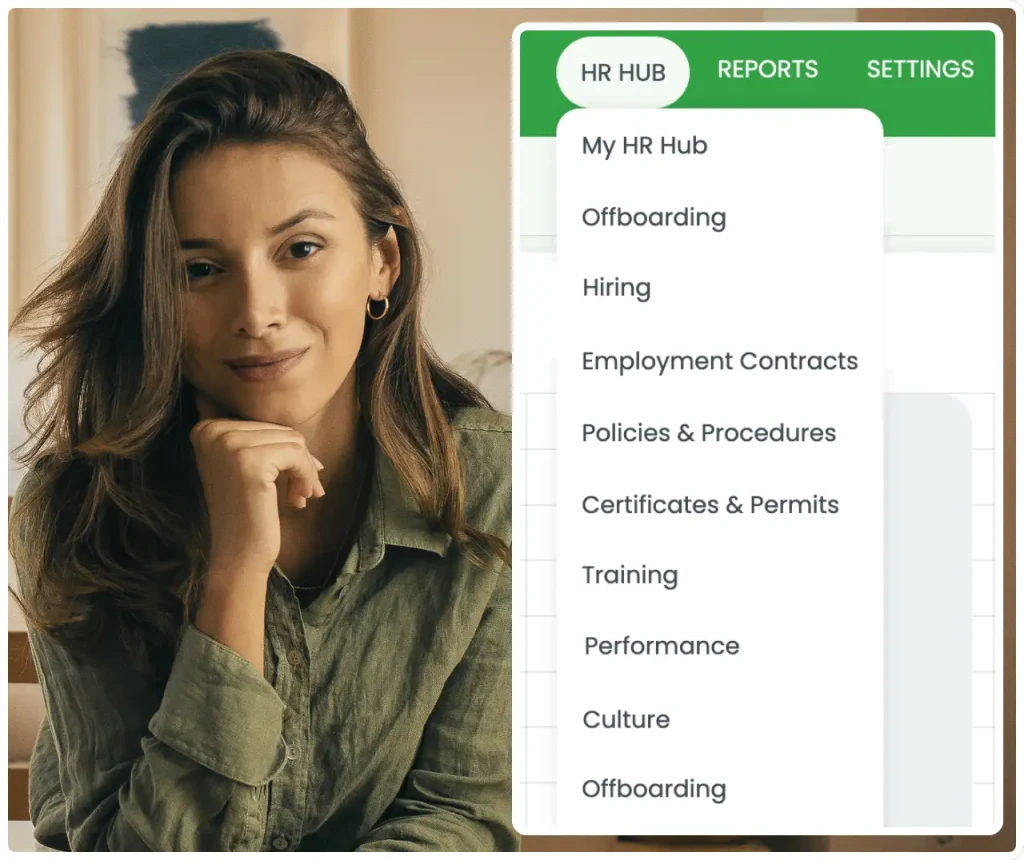
Combines core HR — records, onboarding, offboarding, contracts, policies, certifications, leave, training and culture surveys — with modern award interpretation applied to every timesheet. Published at AUD $4.00 per employee per month for HR only, the lowest published Australian rate in this comparison, with a 3-staff minimum rather than 10.
Shift-based Australian businesses where award compliance is the real problem
Prices are rendered from a maintained data file, with each vendor’s own pricing page and last-verified date recorded against it. “Quote only” means the vendor publishes
no rate — we do not reproduce figures from other comparison sites.
How we compared them
Almost every HRIS listicle ranking Australian vendors states no methodology at all, which makes the ordering impossible to check. Here is ours.
Australian obligations first
Scored on native Australian payroll, STP Phase 2, superannuation on ordinary time earnings, and modern award interpretation — not on feature counts.
Pricing read from the vendor
Every figure comes from the vendor’s own published pricing page, stored with the date it was verified. Quote-only vendors are labelled, not estimated.
Fit over ranking
No overall winner is declared, because the right platform depends on whether your staff work rosters and where your payroll already lives.
Our own bias disclosed
RosterElf is on this list and we publish it. So the page states where RosterElf is weaker and includes competitors that outscore it on user reviews.
Feature comparisons are checked against each vendor's public documentation at the time of writing. Assessments of usability, fit and value are our reviewers' opinions, not statements of
fact, and products change often. We'd encourage you to trial both platforms and judge for yourself. Spotted something out of date?
Tell us and we'll correct it
.
What an HRIS actually is
An HRIS — human resource information system — is the system of record for your people. It holds employee details, contracts, leave balances, documents and org structure, and gives
employees a place to update their own information.
The acronyms blur in practice. HRIS is the record system, HRMS — also sold as an HR management system or
human resource management system — adds process management such as payroll and time, and HCM adds talent: recruitment, learning, performance and succession.
Vendors use all four labels interchangeably, so judge a shortlist on what the product does rather than what it is called. Our HRIS glossary entry and
HRMS glossary entry cover the distinction in more depth.
The question that actually decides your shortlist
Do your staff work rosters? If they do, your compliance risk sits in penalty rates, casual loading and timesheets — and a traditional HRIS will not touch any of it. If they do not,
award interpretation is irrelevant to you and the core-HR platforms on this list are the better fit.
The Australian test
A global HR platform can be excellent and still be the wrong purchase here. Four requirements separate the list, and only the first two appear in most comparisons.
Modern award interpretation
Rates vary by classification, age, employment type and the hour and day worked — so the same classification is paid differently on a Saturday evening and a Tuesday morning. Native in ELMO, Deputy and RosterElf; partial in Employment Hero; absent everywhere else on this list.
Single Touch Payroll Phase 2
An STP obligation belongs to whatever runs your payroll. A platform holding employee records but sending hours elsewhere is not the system lodging your STP — so confirm which product in your stack actually reports.
Superannuation on ordinary time earnings
Super is calculated on OTE, not gross. Overtime is generally excluded while most penalty rates and loadings are included, and getting that split wrong is one of the most common and expensive payroll errors in Australia.
The currency the price is quoted in
Two platforms here publish in USD. An Australian buyer comparing a USD headline against an AUD one is not comparing like with like, and the gap moves with the exchange rate every month.
Key features to look for
Five things decide whether an HRIS works for an Australian employer. The first two are the ones global platforms most often fail.
Local compliance
Built-in Fair Work coverage, modern award interpretation and STP Phase 2 reporting — not a generic compliance module.
Payroll integration
Either native Australian payroll, or a clean two-way sync with Xero or MYOB so hours and rates do not get re-keyed.
Employee self-service
A mobile app or portal where staff update details, apply for leave and see payslips without emailing a manager.
Record retention
Employee records must be kept for seven years under the Fair Work Act and produced on request.
Transparent pricing
Whether a per-employee rate is published at all, and in which currency — half of this list quotes only.
Onboarding workflow
Digital contracts, policy acknowledgements and certification capture, so a new hire is compliant from day one.
What it costs
Across the platforms on this page that publish an Australian rate, HR plans start between AUD $4.00 and $14.00 per employee per month. Treat that as a floor rather than a budget: payroll is frequently a separate tier, two of these vendors quote in US dollars, and four publish no rate at all.
The lowest of those is our own: the RosterElf HR plan at AUD $4.00 per employee per month, against AUD $6.75
from Deputy as the next cheapest published Australian rate. The minimum matters as much as the rate — ours is 3 staff, so AUD $12.00 a month, where Employment Hero bills a floor of 10 users whether you have 10 or not. We are not claiming to be the most
capable HRIS on this page; we are claiming to be the cheapest published way into Australian core HR.
The 8 platforms in detail
1
Employment Hero
All-in-one HR + payrollAustralian
The most widely used HR platform in the Australian SMB market, and the default shortlist entry for a reason — it covers HR, payroll, benefits and hiring in one subscription, with Australian employment law built in rather than bolted on.
Pros
Australian-built, so Fair Work, STP and superannuation are core rather than add-ons
Broadest module coverage of any platform here — HR, payroll, benefits, hiring, learning
Published per-employee pricing on the HR plans, which most of this list does not offer
Large partner and support ecosystem in Australia
Cons
Payroll is not in the HR plans — it arrives with the custom-priced Employment Unlimited tier, so the published rate does not represent a full HR-plus-payroll cost
The module structure means the real price is usually well above the headline once add-ons are on
Breadth comes with configuration weight; smaller teams often use a fraction of what they pay for
Award interpretation exists but is generally considered lighter than dedicated workforce tools for penalty-heavy rosters
Pricing
From AUD $10/employee/month
HR Elite and Employment Unlimited are custom priced and not published. Payroll is included only in Employment Unlimited, so no published per-seat figure covers payroll. HR subscriptions require a minimum of 10 users, billed on the greater of the contractual minimum or actual headcount — so a 5-person team pays for 10. There are NO plans named Lite, Plus or Unlimited: /compare/deputy-vs-employment-hero published that trio at $20/$40/$60 per user, two to six times the real rates, until it was checked against the vendor page on 2026-09-03.
Award interpretation
Partial
Best for
Australian SMBs wanting HR and payroll from one vendor
The long-established Australian HR suite, built modularly so you switch on learning, recruitment, performance or rostering as you need them. The deepest ANZ compliance coverage on this list, and the one most often chosen by organisations with a centralised HR analyst.
Pros
Deep ANZ compliance — modern awards, enterprise agreements and STP are properly handled
Genuinely modular, so a large organisation can adopt in stages
Mature reporting, suited to teams that actually analyse workforce data
Strong Capterra standing among long-established Australian suites
Cons
No published pricing at all, so budgeting requires a sales conversation before you can compare
Modular pricing means total cost climbs as capabilities turn on
A recurring theme in reviews is that configuration is administratively heavy next to newer platforms
Overpowered for a business under roughly 50 staff
Pricing
Quote only
Quote only. ELMO prices per employee per month but publishes no rate — total cost depends on which modules are switched on, so a single per-seat figure would misrepresent it
Award interpretation
Native
Best for
Mid-market and enterprise with a dedicated HR function
3
Worknice
HR operations / core HRISAustralian
A newer Australian-built HRIS focused on HR operations — onboarding, documents, compliance workflows and performance — designed to sit alongside your existing payroll rather than replace it.
Pros
Australian-built, with local compliance and support in your timezone
Very strong user review scores across Capterra and G2
Bundles performance management rather than selling it as a separate module
Integrates with existing payroll, so adopting it does not force a payroll migration
Cons
No native payroll — you keep and pay for a separate payroll system
No award interpretation, so penalty-rate calculation stays wherever it lives today
No published pricing
Smaller vendor and ecosystem than the established suites
Pricing
Quote only
Quote only at the time of checking. Australian-built HRIS aimed at the mid-market
Award interpretation
Not available
Best for
Australian mid-market teams wanting HR ops without payroll migration
4
Rippling
HR + IT + payrollUnited States
Unusual in this list because it unifies HR, payroll and IT — device provisioning, app access and identity alongside employee records. Runs native Australian payroll including STP Phase 2 and superannuation.
Pros
Native Australian payroll with STP Phase 2 and superannuation handled in-platform
The IT side (device and app provisioning) is genuinely differentiated and hard to replicate
Strong fit for businesses employing across several countries
Modern interface and fast onboarding workflows
Cons
No modern award interpretation, which is the specific Australian problem for shift-based employers
Quote-only and modular, so cost is difficult to compare before a sales process
Global-first product design — Australian requirements are supported rather than central
The breadth is wasted spend if you do not need the IT management layer
Pricing
Quote only
Quote only. Modular — cost depends on which products are enabled. Runs native Australian payroll including STP Phase 2 and superannuation
Award interpretation
Not available
Best for
Multi-country teams that also want device and app management
5
HiBob
Core HR + cultureIsrael / global
A core HR platform known for engagement, culture and people-analytics tooling. Popular with fast-growing office-based teams, and generally paired with a separate local payroll system in Australia.
Pros
Best-in-class engagement, culture and people-analytics features
Clean, modern interface with high adoption rates among employees
Strong workforce-planning and compensation tooling
Well suited to distributed knowledge-work teams
Cons
No native Australian payroll — you run and pay for a separate payroll system
No award interpretation
Priced in USD, so the real Australian cost moves with the exchange rate
Culture and analytics depth is largely wasted on a shift-based workforce
Pricing
Quote only
Quote only; commonly cited from around USD $16 per employee per month. No native Australian payroll — pairs with a local payroll system
Award interpretation
Not available
Best for
Growing knowledge-work teams that keep payroll elsewhere
6
BambooHR
Core HRUnited States
One of the best-known core HR systems globally, and genuinely easy to use. The important caveat for Australian buyers is that its payroll product covers United States employees only.
Pros
Among the easiest HR systems to set up and use
Published per-employee pricing across three tiers
Excellent employee self-service and reporting basics
Large integration marketplace
Cons
BambooHR payroll covers US employees only — Australian payroll, STP and superannuation need a separate system entirely
No award interpretation
Priced in USD, so the headline understates the real cost to an Australian buyer
Businesses of 25 or fewer employees are quoted a flat monthly rate rather than the per-seat figure
Pricing
From USD $10/employee/month
Priced in USD, not AUD — the real cost to an Australian buyer is higher than the headline. Businesses of 25 or fewer employees are quoted a flat monthly rate instead. BambooHR payroll covers US employees only, so Australian payroll needs a separate system
Award interpretation
Not available
Best for
Small teams wanting a simple employee system of record
7
Deputy
Workforce management + HR add-onAustralian
A rostering and time-and-attendance platform with HR and payroll modules available as add-ons. Like RosterElf, it is workforce-management-first rather than a full HRIS, and it handles modern award interpretation properly.
Pros
Genuine modern award interpretation on timesheets
Strong scheduling, time clock and labour-cost tooling
Published per-user pricing across three tiers
Large integration ecosystem including Xero and MYOB
Cons
Core HR is an add-on rather than the product, so it is a lighter system of record than a true HRIS
The headline tier price is misleading once payroll and HR add-ons are included
Minimum monthly spend applies on monthly plans
Less suited to office-based teams with no rostering requirement
Pricing
From AUD $6.75/user/month
Excludes GST. AUD $30 minimum monthly spend per invoice. Compare against the $13.95 All-in-One Bundle, not the a-la-carte stack — Core + Payroll + HR alone is $17.25 and the full stack $22.00, so any saving quoted against those overstates what a buyer would actually pay.
Award interpretation
Native
Best for
Shift-based businesses wanting scheduling with an HR layer
Our own platform, so here is the boundary drawn honestly. RosterElf HR Hub covers the core-HR set: employee records and self-service, onboarding and offboarding, digital employment contracts, policy management and acknowledgement tracking, licence and certification expiry, leave, training, culture surveys, performance reviews and goals, and an AI assistant for Fair Work questions. What it does not have is compensation planning, hiring is still in early access, and it does not run payroll. Underneath all of that sits rostering, time and attendance and award interpretation, which is the part a conventional HRIS leaves to you.
Pros
Modern award interpretation applied to every timesheet before it reaches payroll
Core HR is genuinely covered — records, onboarding and offboarding, contracts, policies, certifications, leave, training and culture surveys
Published per-employee pricing in AUD with no quote process
Payroll-ready exports to Xero and MYOB — top-rated rostering app on the Xero App Store
Cons
No compensation planning, and hiring is still in early access
No native payroll; it feeds your payroll system rather than replacing it
Engagement tooling is culture surveys rather than the analytics depth of a dedicated platform
Little reason to choose it if nobody in your business works a roster
Pricing
From AUD $4.00/employee/month
HR plan (HR tools only), billed monthly, minimum 3 staff — so a 3-person team pays AUD $12.00/month. Add rostering and time & attendance with Core at AUD $8.00, or take both on Full Suite at AUD $10.00 per employee per month
Award interpretation
Native
Best for
Shift-based Australian businesses where award compliance is the real problem
Five more platforms come up regularly in Australian HRIS shortlists. They are not profiled above because each serves a narrower case than the eight, but they belong on your radar. No
pricing is quoted for them here — the figures in circulation come from other comparison sites rather than the vendors.
Sentrient
Australian-built, weighted to workplace compliance training, policy governance and induction rather than broad HR administration.
Happy HR
Australian SMB HR platform with performance and compliance tooling, and payroll available through its own module.
Deel
Employer-of-record and global contractor payments. The right answer for hiring across borders, lighter on core HR.
Workday
Enterprise HCM with the deepest finance and workforce planning. Cost and implementation scale accordingly.
ADP Workforce Now
Enterprise payroll heritage with HR layered on. Common in large, multi-entity Australian organisations.
Keeping Xero or MYOB
Not an HRIS at all, but worth naming: accounting payroll plus a workforce platform is a legitimate stack for many shift-based businesses.
Pricing compared
Read this table with two cautions. Half of these vendors publish no rate at all, and two publish in US dollars — so the headline figures are not directly comparable until you convert and
add payroll.
Platform
Model
Published from
What the price does not include
Employment Hero
Published per employee
From AUD $10/employee/month
HR Elite and Employment Unlimited are custom priced and not published. Payroll is included only in Employment Unlimited, so no published per-seat figure covers payroll. HR subscriptions require a minimum of 10 users, billed on the greater of the contractual minimum or actual headcount — so a 5-person team pays for 10. There are NO plans named Lite, Plus or Unlimited: /compare/deputy-vs-employment-hero published that trio at $20/$40/$60 per user, two to six times the real rates, until it was checked against the vendor page on 2026-09-03.
ELMO Software
Quote only
Quote only
Quote only. ELMO prices per employee per month but publishes no rate — total cost depends on which modules are switched on, so a single per-seat figure would misrepresent it
Worknice
Quote only
Quote only
Quote only at the time of checking. Australian-built HRIS aimed at the mid-market
Rippling
Quote only
Quote only
Quote only. Modular — cost depends on which products are enabled. Runs native Australian payroll including STP Phase 2 and superannuation
HiBob
Quote only
Quote only
Quote only; commonly cited from around USD $16 per employee per month. No native Australian payroll — pairs with a local payroll system
BambooHR
Published per employee (USD)
From USD $10/employee/month
Priced in USD, not AUD — the real cost to an Australian buyer is higher than the headline. Businesses of 25 or fewer employees are quoted a flat monthly rate instead. BambooHR payroll covers US employees only, so Australian payroll needs a separate system
Deputy
Published per user
From AUD $6.75/user/month
Excludes GST. AUD $30 minimum monthly spend per invoice. Compare against the $13.95 All-in-One Bundle, not the a-la-carte stack — Core + Payroll + HR alone is $17.25 and the full stack $22.00, so any saving quoted against those overstates what a buyer would actually pay.
RosterElf
Published per employee
From AUD $4.00/employee/month
HR plan (HR tools only), billed monthly, minimum 3 staff — so a 3-person team pays AUD $12.00/month. Add rostering and time & attendance with Core at AUD $8.00, or take both on Full Suite at AUD $10.00 per employee per month
RosterElf pricing shown is the standalone HR plan at AUD $4.00 per employee per month, billed monthly — the comparable product on an HRIS comparison. Core (rostering
and time & attendance) is AUD $8.00 and Full Suite is AUD $10.00. Verified 29 August 2026.
How to choose
Four questions get most Australian businesses to a shortlist of two.
1 Do your staff work rosters?
If yes, award interpretation is your biggest compliance exposure and most HRIS platforms do not do it. Start with ELMO, Deputy or RosterElf. If no, ignore that column entirely — Worknice, HiBob and BambooHR become viable.
2 Where does payroll live today, and are you willing to move it?
Migrating payroll is the most disruptive part of any HR project. If you want to keep Xero or MYOB, choose a platform that integrates — Worknice, Deputy or RosterElf. If you want one vendor for everything, look at Employment Hero, ELMO or Rippling.
3 How big is your HR function?
ELMO and Rippling reward organisations with someone whose job is configuring and analysing them. Under about 50 staff with no dedicated HR person, that depth usually goes unused and unpaid-for capability becomes the main cost.
4 Can you get a price without a sales process?
Four of these eight publish nothing. That is not disqualifying, but it does mean weeks of sales conversation before you can compare — worth knowing before you start if you are on a deadline.
If the answer to question one was yes
RosterElf costs AUD $8.00 per employee per month on Core, applies modern award rates to every timesheet before it reaches Xero or MYOB, and publishes its
pricing. It is not a full HRIS and this guide does not pretend otherwise — but if your people work shifts, it solves the part that actually costs you money.
There is no single best HRIS — the right answer depends on whether you need native Australian payroll, whether your staff work rosters, and how big your HR function is.
For Australian SMBs wanting HR and payroll from one vendor, Employment Hero is the usual starting point. For mid-market and enterprise with a dedicated HR team, ELMO has the deepest ANZ compliance. For shift-based businesses where modern award interpretation is the real problem, a workforce-first platform such as Deputy or RosterElf solves more than a traditional HRIS will.
Narrowed to five and judged on Australian requirements rather than global feature counts: Employment Hero for SMBs wanting HR and native payroll from one vendor; ELMO for mid-market and enterprise needing the deepest ANZ compliance; Worknice for localised onboarding and workflow automation; Deputy for shift-based teams needing native award interpretation; and RosterElf where rostering, timesheets and award-correct pay are the actual problem.
Three of the five are Australian-built, which matters more than it sounds: modern award interpretation and Single Touch Payroll are Australian instruments that global platforms generally do not implement natively.
There is no reliable published market-share figure for HRIS in Australia, and any list claiming one is usually reporting its own customer base or a global survey.
Global usage surveys are dominated by Workday and SAP SuccessFactors, but both are enterprise suites that very few Australian small and mid-sized businesses run. Among Australian SMBs the platforms encountered most often are the locally built ones, because they handle awards and STP natively. Treat “most used” as a weak signal either way — the more useful question is which system handles your award, your payroll and your roster.
In practice the three terms are used almost interchangeably by vendors, and the distinction matters less than what a specific product actually does.
Historically an HRIS is the system of record for employee data, an HRMS adds process management such as payroll and time, and an HCM adds talent management — recruitment, learning, performance and succession. Judge a shortlist on the features you need rather than on the acronym in the marketing.
Published per-employee rates on this list start around AUD $10 per employee per month for HR-only plans, but that figure rarely reflects the real cost.
Three things push it up: payroll is frequently a separate module or tier, several vendors quote in USD rather than AUD, and the most capable Australian suites publish no pricing at all. Budget on a total that includes payroll, and confirm the currency before comparing.
Xero and MYOB are accounting systems with payroll. They pay people correctly once you tell them the hours and rates — they are not employee systems of record, and they do not manage onboarding, documents, policies or performance.
They also do not interpret modern awards. Xero’s own product board lists automatic award wages as not in pipeline and recommends the Xero App Store for it, which is why shift-based businesses generally pair accounting payroll with a workforce platform.
Very few. Of the eight compared here, award interpretation is native in ELMO, Deputy and RosterElf, and partial in Employment Hero. It is absent from Worknice, Rippling, HiBob and BambooHR.
This is the single biggest gap between a global HR platform and an Australian shift-based employer’s actual requirements. Award rates vary by classification, age, employment type and the hour and day worked — a Saturday evening shift and a Tuesday morning shift at the same classification are paid differently.
On this list, Employment Hero (on its Employment Unlimited tier), ELMO and Rippling run native Australian payroll with STP and superannuation.
BambooHR’s payroll covers United States employees only, and HiBob has no native Australian payroll — both need a separate local payroll system. Worknice, Deputy and RosterElf integrate with your existing payroll rather than replacing it.
Only if it runs Australian payroll. STP Phase 2 reporting is a payroll function, so a platform that stores employee records but sends hours to another system is not the thing lodging your STP.
Check specifically for STP Phase 2, superannuation guarantee calculated on ordinary time earnings, and modern award coverage. A vendor supporting “global payroll” does not automatically support all three.
Yes for core HR, with two gaps we will name. RosterElf HR Hub holds the employee record and self-service, and covers onboarding, offboarding, digital employment contracts, policy management with acknowledgement tracking, licence and certification expiry, leave, training, culture surveys and performance reviews with goals, plus an AI assistant for Fair Work questions.
It does not do compensation planning, hiring is still in early access, and it does not run payroll, it feeds it. What it adds that a conventional HRIS does not is modern award interpretation on every timesheet. If you employ a salaried office team and performance management is the point, choose one of the dedicated platforms on this list instead.
Every pricing figure was read from the vendor’s own published pricing page and is rendered from a single maintained data file rather than typed into the article, with the date it was last verified recorded against each vendor.
Where a vendor does not publish a price, this guide says “quote only” rather than reproducing a figure from another comparison site. Read our full review methodology.
Because leaving it out would be less transparent, not more. This is published by RosterElf and we have an obvious interest — so the page states where RosterElf is weaker, does not claim a ranking it has not earned, and includes competitors that outscore it on user reviews.
RosterElf’s Capterra rating sits below both ELMO and Worknice, and this guide says so rather than selecting a metric that flatters us.