

Managing paid breaks with a dedicated position
RosterElf’s unpaid breaks feature automatically deducts break time from a shift’s paid hours. A paid break works differently — it’s time you want to pay staff for, such as a paid rest break, a paid induction, or a short paid meeting, so it shouldn’t be deducted from anything.
The way to manage this in RosterElf is to create a dedicated Paid Break position and roster it like any other shift. This article walks through setting up the position, assigning eligible staff, and rostering the paid break, along with a few tips for payroll, templates, and reporting.
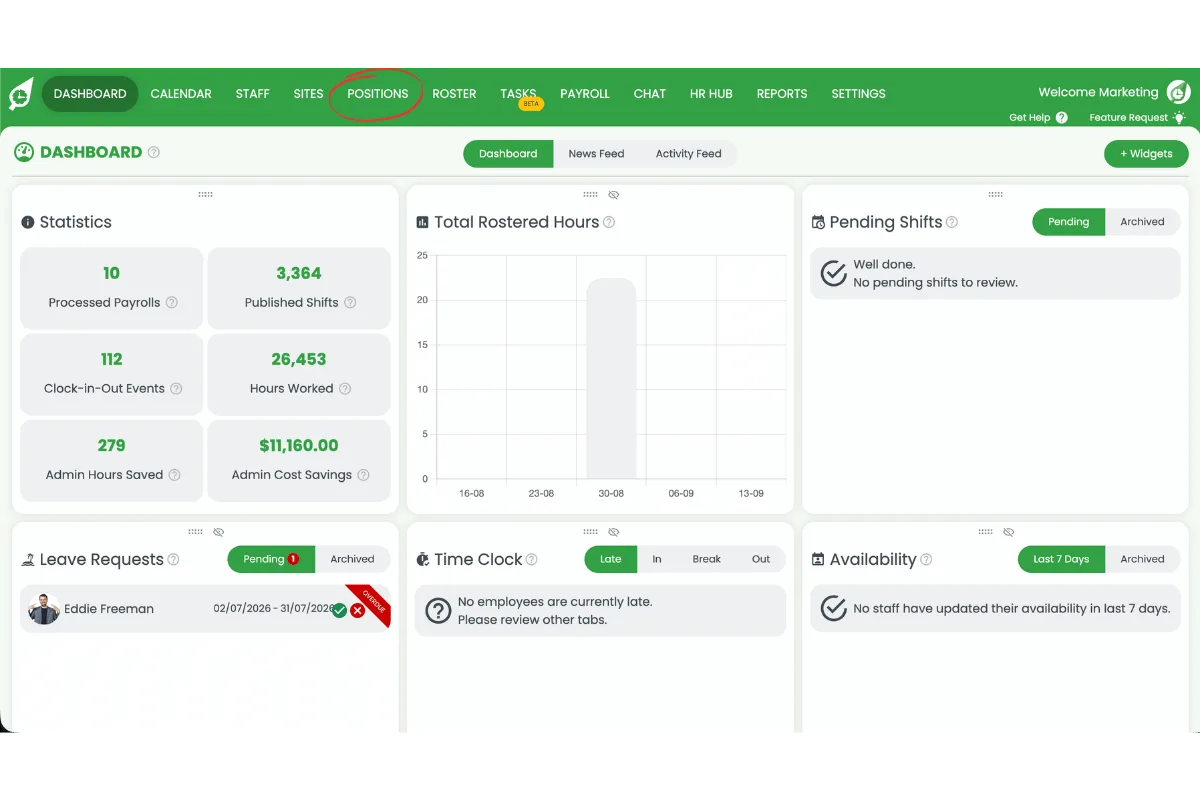
1. Open the Positions tab
1.1 Click on the Positions tab in the main menu. For a general overview of what positions are and how they work, see add and manage job positions.
2. Create the Paid Break position
This section covers creating a new position specifically for paid breaks, including its name, colour, and description.
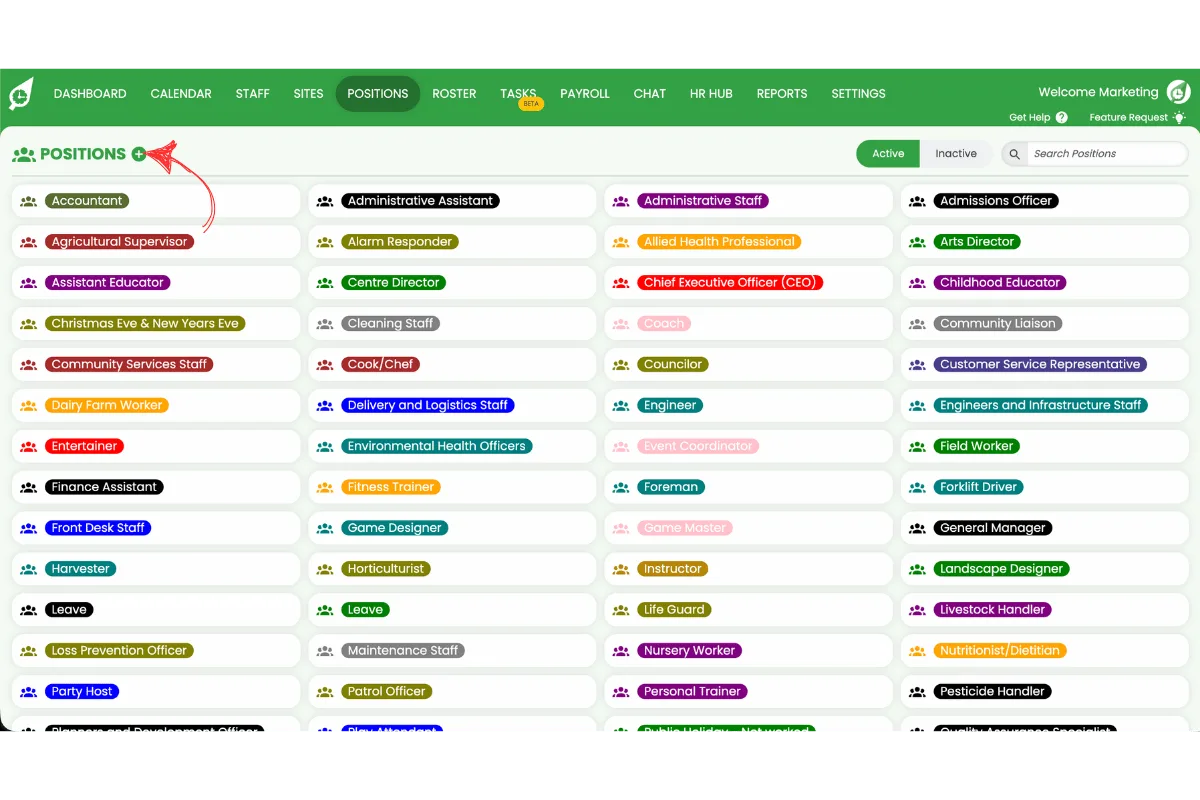
2.1 click the plus button
2.1.1 Click the + (plus) button next to the Positions heading to open the Add Position modal.
2.2 enter the position details
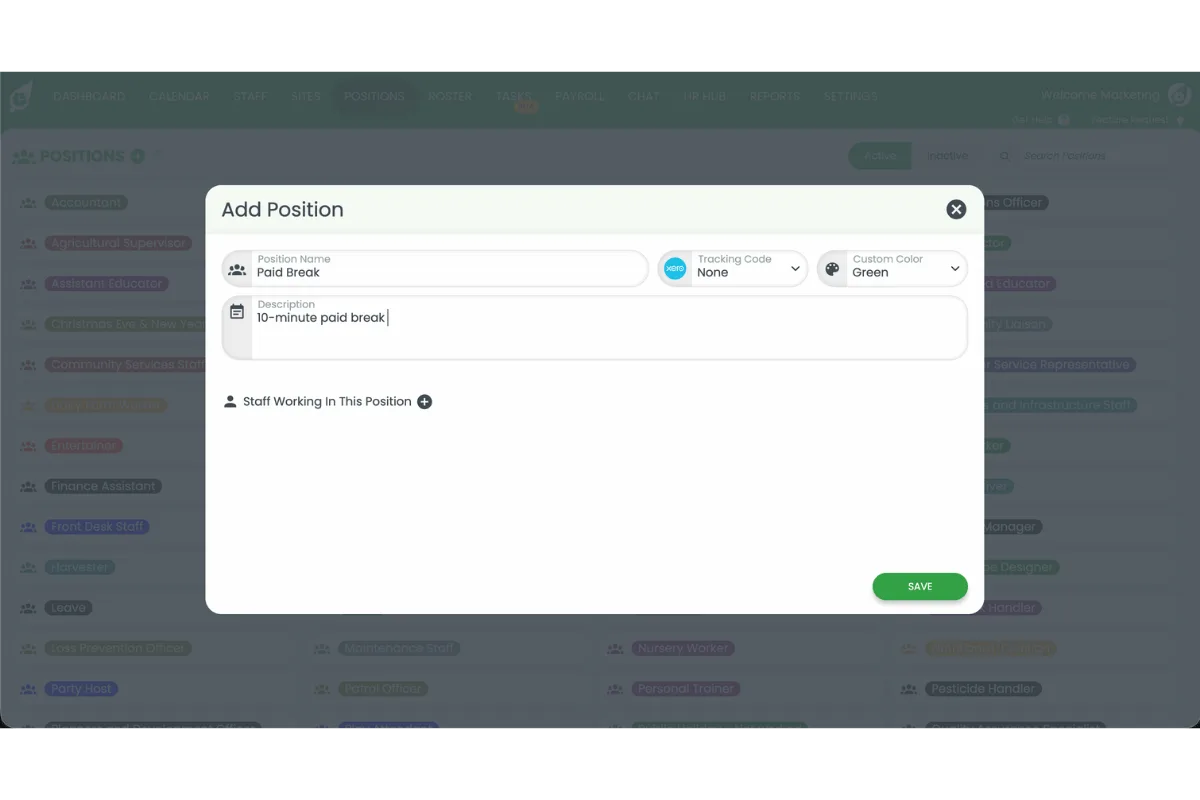
2.2.1 Enter Paid Break as the position name.
2.2.2 Choose a colour to make paid breaks easy to spot on the roster.
2.2.3 Add a description, such as “10-minute paid break”, so staff and managers know what the position covers.
3. Assign staff eligible for paid breaks
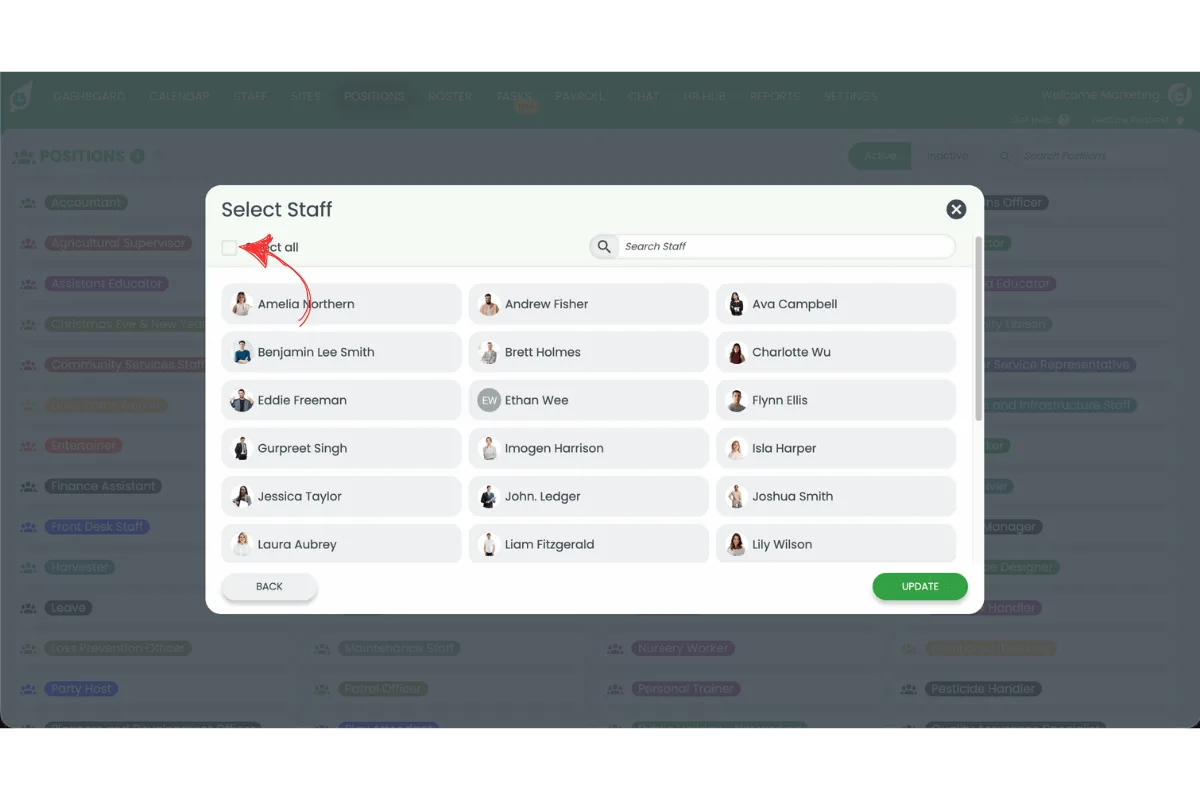
Before saving the position, assign every staff member who’s eligible for a paid break. Only staff assigned to a position can be rostered onto it.
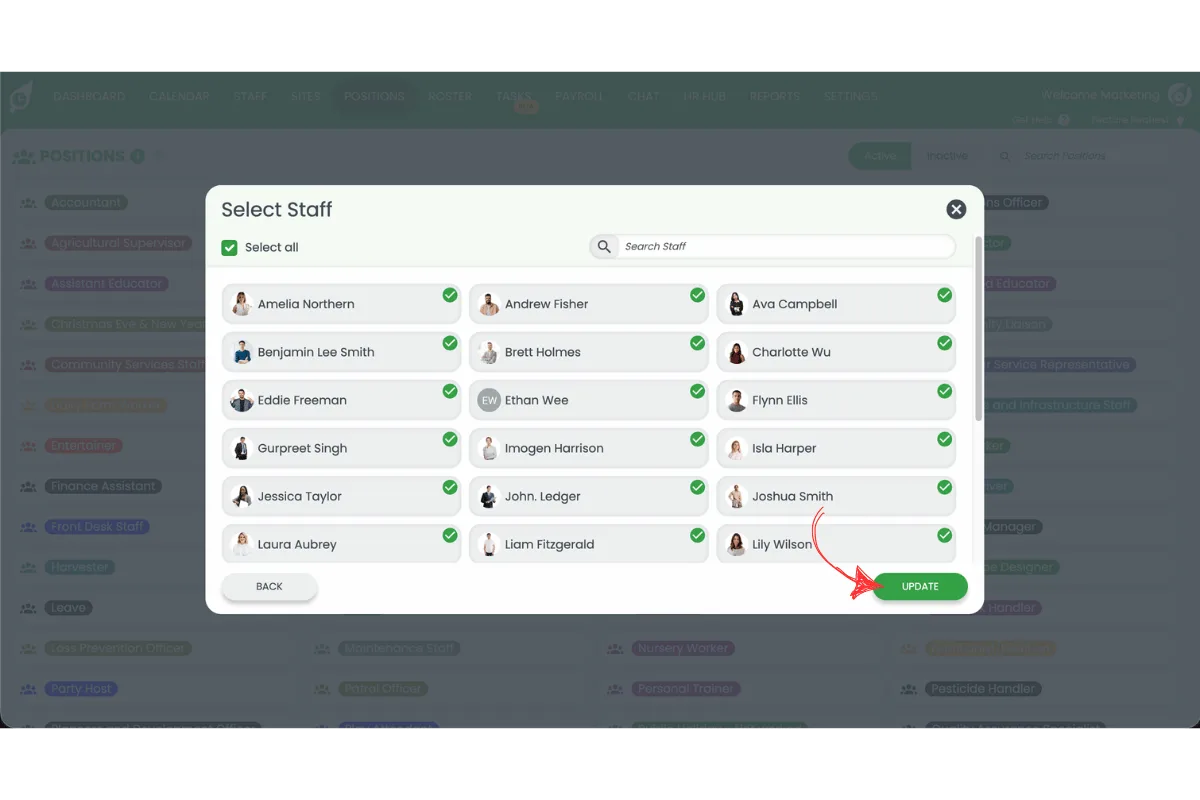
3.1 open select staff
3.1.1 Click Staff Working In This Position (+), then tick Select all if every staff member is eligible for a paid break — or search for and tick individual staff instead.
3.2 confirm the staff list
3.2.1 With the eligible staff selected, click Update to confirm the list and return to the Add Position modal.
3.3 save the position
3.3.1 Back on the Add Position modal, click Save to create the Paid Break position. It’s now ready to roster.
4. Roster the paid break
4.1 Add a new shift on the roster, select Paid Break as the position, set the start and finish time to match the length of the paid break, and select the staff member taking it.
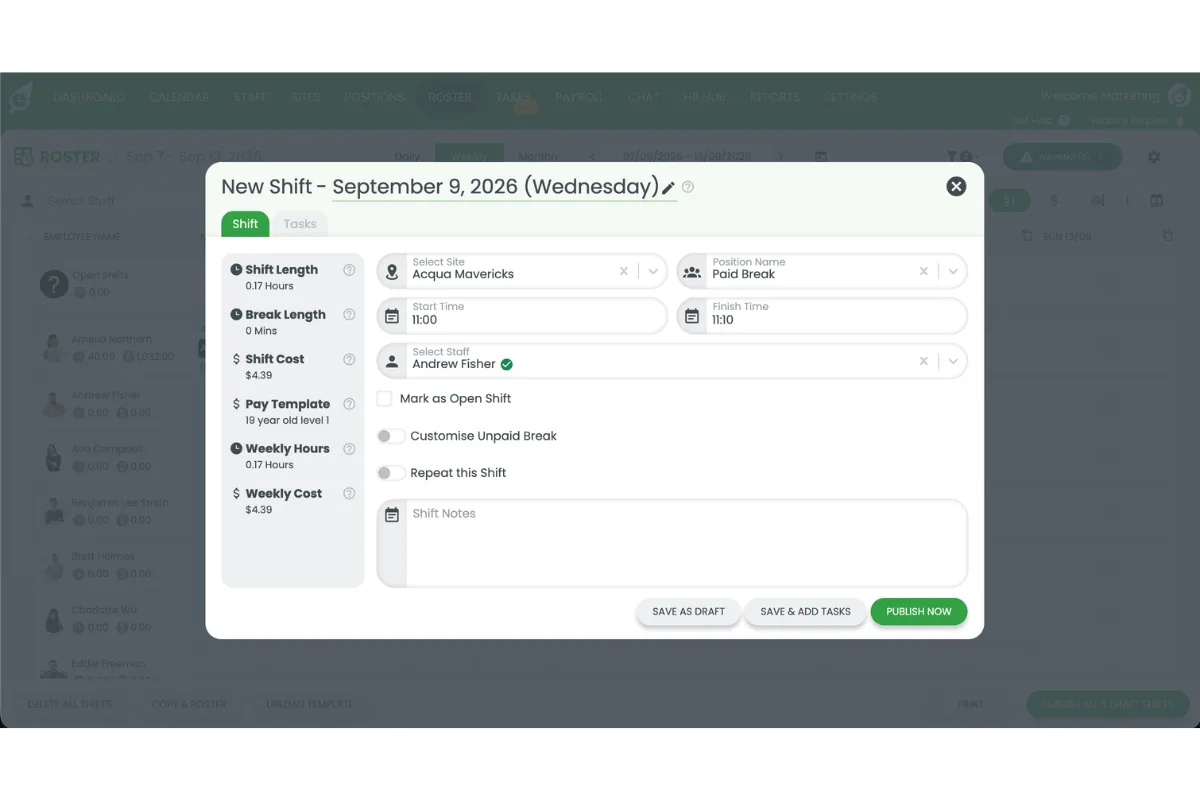
Roster multiple staff at once
If several staff members are taking the same paid break at the same time, select them all in the Select Staff field when creating the shift instead of creating a separate shift for each person.
5. Manage paid breaks going forward
5.1 reviewing paid breaks in payroll
Don't approve paid break shifts separately
When reviewing and approving shifts on payroll, check that the paid break hours look correct — but don’t approve the Paid Break shift as an extra line. It’s already covered by the staff member’s normal worked hours for that day, so approving it separately would double up the paid time.
5.2 reusing paid breaks in templates and copied rosters
Once a Paid Break shift is on your roster, you don’t need to re-add it manually every week. Save the roster as a roster template to reuse the same pattern, or copy a past roster that already includes the paid break to a new week.
5.3 reporting on paid breaks
Because Paid Break is a normal position, it’s picked up by the Complete Shift Report under the Reports tab. Filter the report by position to see how many paid break hours have been rostered or worked across your team.
Frequently asked questions
1. How do I add a paid break in RosterElf?
Create a new position called Paid Break under the Positions tab, assign every staff member who’s eligible, then roster it like any other shift by selecting the Paid Break position, setting the time, and assigning staff. See the steps above for a full walkthrough.
2. What's the difference between a paid break and an unpaid break?
RosterElf’s built-in unpaid breaks are deducted from a shift’s paid hours automatically, based on shift length. A paid break isn’t deducted from anything — it’s its own rostered shift on a dedicated Paid Break position, so the time is fully paid and appears as normal worked hours on the timesheet.
3. Can I roster more than one staff member onto a paid break at once?
Yes. When you add the Paid Break shift to the roster, you can select multiple staff members at once in the Select Staff field, so you don’t need to create a separate shift for each person taking the same paid break.
4. Do I need to approve paid break shifts separately in payroll?
No. Review the paid break hours on the payroll approval screen to confirm they look correct, but don’t approve them as a separate line — they’re already included in the staff member’s normal worked hours for that day.
5. Can I save paid breaks into a roster template or a copied roster?
Yes. Once the Paid Break position is on your roster, it’s saved along with everything else when you create a roster template or copy a past roster — so you don’t need to add it manually every week.
6. Can I report on paid breaks?
Yes. Because a paid break is a normal position on the roster, it’s included in the Complete Shift Report, which you can filter by position to see paid break hours across your team.