
Resource recovery sorter job description
A complete resource recovery sorter job description template for Australian waste operators, with the duties, licences and award detail that actually apply to the role.
Resource recovery sorter job description
PDF format • Ready to download
By downloading, you agree to our template disclaimer
This resource recovery sorter job description template reflects Australian workplace standards and waste industry practice at the time of publication. It is a general guide only and does not constitute legal advice. Confirm the applicable classification, licence requirements and pay rate against the Waste Management Award 2020 (MA000043) and the actual duties of the role before advertising. For complex coverage questions, seek independent legal or HR advice. It does not constitute legal, HR, or professional advice and should not be relied on as a substitute for advice specific to your business, workforce, or circumstances.

What does a resource recovery sorter do?
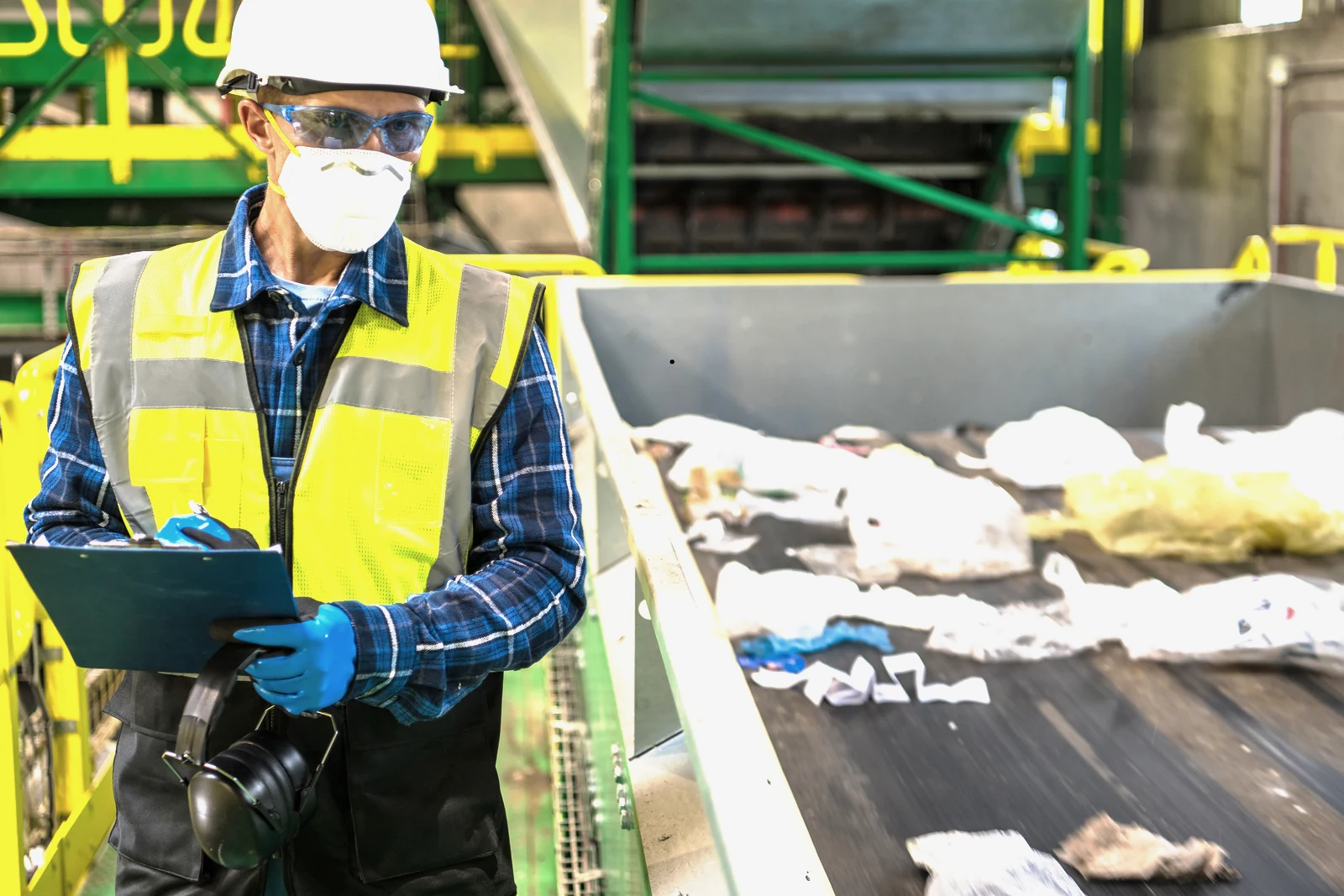
A resource recovery sorter works the picking line at a materials recovery facility, separating mixed material into clean streams and pulling out contamination before it reaches the baler. The output quality decides whether the facility can sell the material or has to pay to dispose of it.
The work is repetitive, fast and done standing beside a moving conveyor, so pace and concentration matter more than experience. Under the Waste Management Award sorters sit at Level 2 as process workers.
Key responsibilities
Core duties included in this job description template
Sort material on the picking line
Separate paper, cardboard, plastics, glass and metals into the correct chutes at line speed.
Remove contamination
Pull out material that would downgrade or reject an outgoing bale.
Identify and isolate hazardous items
Remove gas cylinders, batteries and sharps safely and report them rather than letting them pass.
Meet quality and throughput targets
Work to the facility's contamination thresholds so outgoing material meets its specification.
Keep the work area clear
Clear spillage from around the line and chutes so the area stays safe and the plant keeps running.
Report plant issues promptly
Flag jams, belt damage and chute blockages before they become a stoppage.
Skills and attributes
What to look for in candidates
Rapid visual identification
Distinguishes material types quickly and correctly at line speed.
Sustained pace
Maintains accuracy over a full shift on a moving line.
Safety around plant
Understands guarding, isolation and never reaching into a running conveyor.
Physical stamina
Comfortable standing and reaching repetitively for extended periods.
Quality focus
Understands that a contaminated bale costs the facility money.
Line teamwork
Coordinates with sorters either side so the whole line keeps up.
Licences and qualifications
Requirements for resource recovery sorter positions vary by operator and vehicle class. These are the credentials Australian waste employers ask for most often.
- No formal qualification required
Not required. Sorters are trained on the job in material identification and line procedures.
- Plant safety induction
Provided. Covers conveyor safety, isolation, emergency stops and PPE.
- Manual handling training
Provided. Delivered at induction and refreshed periodically.
- Hazardous material awareness
Desirable. Useful for recognising batteries, gas cylinders and sharps on the line.
- Certificate II in Resource Recovery
Desirable. Supports progression to plant operator or line supervisor.
- Forklift licence (LF)
Desirable. Useful for moving finished bales in the yard.
Working conditions
Set clear expectations for candidates about the work environment
- Indoor plant environment with significant noise, dust and odour
- Standing at a moving conveyor for most of the shift
- Repetitive reaching, sorting and lifting
- Mandatory PPE including gloves, eye protection and hearing protection
- Shift work, including afternoon and night shifts at facilities running extended hours
- Exposure to sharps and hazardous items entering on the line
Award coverage
Understanding the Waste Management Award
Waste Management Award 2020 (MA000043)
Most resource recovery sorter positions in Australia are covered by the Waste Management Award 2020 (MA000043). This role generally sits at Level 2, which pays $1,168.48 a week or $30.75 an hour for full-time and part-time employees, and $38.44 an hour for casuals, from 1 July 2026. See the full Waste Management Award pay guide for every classification, penalty rate and allowance.
The rates include the industry allowance
Fair Work publishes these rates with the $3.24 per hour industry allowance already included, because clause 16.2(b) makes it an all-purpose allowance — payable for all purposes including overtime and shift rates. Rate sites that strip it out quote a Level 1 rate around $26.63 instead of $30.11, and every penalty calculated from that lower base is understated.
Waste Management Award pay rates 2026-27
Minimum ordinary hourly rates by classification, effective from 1 July 2026. Casual includes the 25% casual loading. Penalty rates for weekends, evenings and public holidays apply on top.
| Classification | Weekly | Hourly | Casual hourly |
|---|---|---|---|
| Level 1 – depot hand in training Depot hand in training | $1143.98 | $30.11 | $37.64 |
| Level 2 – labourer / depot hand Labourers, depot hands, waste facility attendants, process workers, driver offsiders | $1168.48 | $30.75 | $38.44 |
| Level 3 – weighbridge / driver to 4.5t Weighbridge operators, trainee drivers up to 14 tonnes, drivers of vehicles up to 4.5 tonnes | $1180.58 | $31.07 | $38.84 |
| Level 4 – plant to 150 BHP / driver to 14t Truck-mounted crane, road sweeper and incinerator operators; earthmoving plant up to 150 BHP; drivers over 4.5 up to 14 tonnes | $1199.18 | $31.56 | $39.45 |
| Level 5 – driver 14–30t Rear-end loading, roll-on/roll-off, side lift, skip lift, liquid and septic/chemical waste drivers | $1212.58 | $31.91 | $39.89 |
| Level 6 – articulated / over 30t Articulated vehicle drivers, rigid vehicles over 30 tonnes, front lift operators, SOLO grab-operated collection | $1240.98 | $32.66 | $40.83 |
| Level 7 – driver/instructor Driver/instructor, all systems | $1321.78 | $34.79 | $43.49 |
| Level 8 – intermodal / plant over 150 BHP Intermodal and tipping platform operators; earthmoving plant over 150 BHP | $1381.68 | $36.36 | $45.45 |
| Level 9 – double articulated (B double) Double articulated (B double) drivers | $1393.88 | $36.68 | $45.85 |
Source: the Fair Work Waste Management Award pay guide (MA000043). Full classifications, penalty rates, allowances and a calculator are in the Waste Management Award pay guide .
Who should use this template?
This job description template is designed for Australian waste and resource recovery employers
Whether you run a single depot or a multi-site collection fleet, a clear job description reduces disputes about duties and makes award classification easier to defend.
How to use this template
Tips for adapting the job description to your operation
Name the vehicle and equipment
Specify the exact vehicle class and lifting system so applicants know what licence and experience they need.
State the start time honestly
Early starts are the single biggest reason waste roles turn over. Put the real start time in the ad.
Confirm the classification level
This role generally sits at Level 2, but check the classification against the actual duties before you advertise a rate.
List the tickets you will actually check
Only list credentials you will verify. Requirements you do not check discourage good applicants for no benefit.
Describe the site environment
Depot, transfer station, picking line or on-road — candidates self-select accurately when the environment is clear.
Add your own safety expectations
Include any site-specific procedures, PPE and fatigue management obligations that apply.
Ready to hire your next resource recovery sorter?
Once the crew is in place, build compliant rosters in minutes, track early starts with GPS clock-ins and export award-ready timesheets to payroll.
Related resources
More templates and tools for waste and resource recovery employers
Waste Management Award pay guide
Every classification, penalty rate and allowance under MA000043, plus a free calculator.
View the guideWaste management rostering
How collection fleets roster early starts, depot clock-ins and licence-matched relief drivers.
See the industryHR policy templates
Free workplace policy templates including code of conduct, WHS and leave policies.
Browse templatesRelated job descriptions
More roles in this category — free templates you can download and edit.
Skip bin driver job description
Free skip bin driver job description template — duties, licences and Waste Management Award pay. Download the PDF.
Learn moreTransfer station attendant job description
Free transfer station attendant job description template — duties, licences and Waste Management Award pay. Download the PDF.
Learn moreWaste collection driver job description
Free waste collection driver job description template — duties, licences and Waste Management Award pay. Download the PDF.
Learn moreWaste driver instructor job description
Free waste driver instructor job description template — duties, licences and Waste Management Award pay. Download the PDF.
Learn moreWeighbridge operator job description
Free weighbridge operator job description template — duties, licences and Waste Management Award pay. Download the PDF.
Learn moreDepot hand job description
Free depot hand job description template — duties, licences and Waste Management Award pay. Download the PDF.
Learn moreExplore the waste management cluster
Guides, tools and templates to help you hire, roster and pay waste crews
Industries
How-to guides
Regulatory sources
This job description is aligned with Australian workplace award requirements
Resource recovery sorter job description FAQ
-
A resource recovery sorter works a picking line at a materials recovery facility, separating mixed material into clean streams, removing contamination before it reaches the baler, and isolating hazardous items such as batteries and gas cylinders.
-
It carries real risks, which is why plant safety induction is mandatory. The main hazards are the moving conveyor itself, sharps entering on the line, and hazardous items such as gas cylinders and lithium batteries. PPE and isolation procedures are not optional.
-
Level 2 under the Waste Management Award, which covers process workers alongside labourers and waste facility attendants.
-
Often. Facilities running extended hours roster afternoon and night shifts, which attract shift loadings under the award — 117.5% for afternoon shift and 130% for night shift, defined by when the shift finishes rather than when it starts.
Before you download
General information only — not legal advice
This document is a general HR template provided for informational purposes only. It is not legal advice and may not reflect the latest changes in legislation or apply to every workplace situation. Roster Elf Pty Ltd and the template provider accept no liability for any loss arising from reliance on this document. Users should seek independent legal advice and customise the template to ensure it complies with all relevant laws, awards and workplace requirements.