
The 2026/27 national minimum wage in Australia is $26.44 per hour ($1,004.90/week), effective 1 July 2026 — a 4.75% rise that also lifted most modern award minimums, following the Fair Work Commission’s June 2026 Annual Wage Review. Your actual obligation depends on which of the 120-plus modern awards covers your staff, their classification level, and any penalty rates and allowances that apply — so the minimum wage is a floor, not the whole picture.
Australian award rates can be confusing for business owners. With over 120 modern awards, varying penalty rates, annual increases, and complex classification structures, supporting compliance efforts requires ongoing attention and a solid understanding of the system. Using award interpretation software can help automate these calculations and reduce errors. This guide breaks down everything you need to know about Australian award rates in 2025/26 — and what’s changing in 2026/27 — including the latest minimum wage, how penalty rates work, classification levels, and practical tips for managing payroll compliance.
Whether you’re running a café, managing an aged care facility, or operating a retail store, understanding your award obligations is essential. Getting it wrong can result in underpayment claims, back-pay orders, and penalties from the Fair Work Ombudsman. Getting it right means happy staff, smooth payroll, and peace of mind.
Key takeaways
- 2025/26 minimum:
The national minimum wage is $26.44 per hour (effective 1 July 2026)
- 2026/27 update:
All modern award rates increase 4.75% from 1 July 2026 — national minimum wage rises to $26.44/hr
- Rates vary:
Award rates vary significantly by industry, classification level, and employment type
- Penalty rates:
Penalty rates apply for weekends, public holidays, overtime, and late-night work
- Casual loading:
Casual employees receive a 25% loading but miss out on paid leave entitlements
For a comprehensive checklist, download our free guide: HR Compliance for Small Businesses.
What are modern awards?
Modern awards are legal documents that set out the minimum pay rates and conditions for employees in a particular industry or occupation. They were introduced as part of the Fair Work system in 2010 to simplify and standardise workplace conditions across Australia. Today, they form a crucial part of the employment safety net, working alongside the National Employment Standards (NES) to protect workers’ minimum entitlements.
There are over 120 modern awards in Australia, each covering different industries or occupations. The most common awards that small businesses deal with include the Hospitality Industry Award, Restaurant Industry Award, Fast Food Industry Award, General Retail Industry Award, and various healthcare awards like the Aged Care Award, Nurses Award, and SCHADS Award for disability support workers. Industry-specific awards such as the Manufacturing Award and Mining Industry Award cover production, resources and quarrying employers.
Each award specifies minimum pay rates for different classification levels, penalty rates for weekend and public holiday work, overtime rates, allowances for things like uniforms or travel, and conditions around breaks, rosters, and termination. Using rostering software that integrates with payroll systems helps support compliance with these requirements. As an employer, you’re legally required to pay at least the minimum rates specified in the relevant award — though you can always pay more if you choose.
Understanding minimum wage changes: 2025/26 and 2026/27
The Fair Work Commission conducts an Annual Wage Review each year to assess whether the national minimum wage and award rates should be adjusted. This review considers factors like the cost of living, economic conditions, and the needs of low-paid workers. The decision typically takes effect from 1 July each year.
From 1 July 2026, the national minimum wage increased by 4.75% to $26.44 per hour, which works out to $1,004.90 per week for a full-time employee working 38 ordinary hours. This increase applied to the national minimum wage as well as minimum rates in most modern awards.
However, it’s important to note that not all award rates increased by the same percentage or on the same date. Some awards have different operative dates for wage increases, particularly in industries that were significantly affected by economic changes. Always check the specific award that applies to your employees to confirm when increases took effect and by how much.
Current 2026/27 rates (effective 1 July 2026):
$26.44
Per hour minimum
$1,004.90
Per week (38 hours)
4.75%
2026/27 increase
2026/27 annual wage review — effective 1 July 2026
The Fair Work Commission announced its June 2026 Annual Wage Review decision. From 1 July 2026, all modern award minimum rates increase by 4.75%. The national minimum wage rises to $26.44/hr ($1,004.90/week). Entry-level classifications that fall below this threshold get bumped to the new floor.
New protections also mean the FWC can no longer reduce penalty rates or overtime rates in any modern award. Update your payroll from 1 July 2026 once official FWC pay guides are published.
Important
The minimum wage is a floor, not a ceiling. Many employees are entitled to higher rates based on their award classification level, years of experience, qualifications held, and any applicable penalty rates. A Level 4 hospitality employee working a Sunday public holiday, for example, could earn significantly more than the base minimum wage.
How penalty rates work
Penalty rates are additional payments made to employees who work outside ordinary hours or on days that are traditionally considered rest days. The purpose of penalty rates is to compensate workers for the inconvenience and social cost of working unsociable hours, and to discourage employers from rostering staff at these times unless genuinely necessary.
The most common penalty rates apply for:
- Saturday work: Typically attracts penalty rates ranging from 125% to 150% of the base rate, depending on the award. Some awards distinguish between casual and permanent employees, with casuals receiving their loading on top of the penalty rate.
- Sunday work: Usually attracts higher penalties than Saturday, commonly 150% to 200% of the base rate. Sunday rates have been a point of significant debate and reform in recent years, particularly in hospitality and retail.
- Public holidays: Generally the highest penalty rates, usually 200% to 250% of the base rate. Employees may also be entitled to a substitute day off if they work on a public holiday, depending on their award and employment type.
- Overtime: When employees work beyond their ordinary hours, they’re typically entitled to time and a half (150%) for the first 2-3 hours of overtime, then double time (200%) thereafter. The specific overtime thresholds vary by award.
- Late night and early morning work: Some awards include additional penalties for shifts that fall outside standard daytime hours, such as work after 10pm or before 6am. These are sometimes called “unsociable hours” loadings.
Common penalty rate ranges
| When worked | Typical penalty rate |
|---|---|
| Saturday | 125% – 150% |
| Sunday | 150% – 200% |
| Public holidays | 200% – 250% |
| Overtime (first 2-3 hrs) | 150% |
| Overtime (after) | 200% |
Rates vary by award — always check your specific award for exact rates.
Calculating penalty rates correctly is one of the most error-prone areas of payroll. Different rates apply to different days, different employment types, and different hours of the day. A single shift that spans midnight on a Saturday going into Sunday can involve multiple different rates. This is where rostering software with built-in award interpretation becomes invaluable.

How to calculate an award pay rate, step by step
Working out what to actually pay a staff member for a given shift follows a repeatable sequence. Start from the award minimum and layer the adjustments on top:
The five-step calculation
-
Identify the award and classification — confirm which award covers the employee and which classification level matches the work they actually perform. This sets the base hourly rate.
-
Apply employment type — for casuals, add the 25% casual loading to the base rate; permanent staff use the base rate with no loading.
-
Apply penalty rates — if the shift falls on a Saturday, Sunday, public holiday, or in a penalty window (e.g. after 10pm), multiply by the relevant penalty percentage for that award.
-
Add overtime where relevant — hours beyond ordinary daily or weekly limits attract overtime rates (commonly 150% then 200%), calculated separately from ordinary penalty hours.
-
Add allowances — layer on any applicable per-hour, per-shift, or per-week allowances (uniform, tool, meal, first aid, higher duties).
Worked example
A casual retail employee on a $26.00 base rate works a Sunday shift where the award Sunday penalty is 150%.
Base rate: $26.00
Sunday penalty (150%): $26.00 × 1.5 = $39.00 (where the award applies the penalty to the ordinary base rate before loading)
Casual loading (25%): the loading interacts with penalties differently across awards — some compound it on top, others use combined rates. Always follow the exact wording of the applicable award.
This is exactly the kind of layered calculation where a pay rate builder removes the manual maths and the risk of error.
Classification levels explained
Each modern award defines classification levels that determine an employee’s minimum pay rate. These classifications are designed to reflect the different types of work performed within an industry, the level of responsibility involved, and the experience or qualifications required. Correctly classifying your employees is essential — getting it wrong is one of the most common causes of underpayment.
For example, the Hospitality Industry Award has seven classification levels. Level 1 covers introductory-level employees in their first three months, performing basic tasks under direct supervision. Level 2 covers food and beverage attendants grade 1, kitchen attendants grade 1, and similar entry-level roles. As you move up the levels, the work becomes more complex, requires more skill or experience, and commands higher pay rates. Level 6 and 7 cover supervisory and managerial positions.
When classifying an employee, you should consider the actual work they perform on a day-to-day basis, not just their job title. An employee with the title “Team Leader” who doesn’t actually supervise anyone shouldn’t be classified at a supervisory level. Conversely, someone performing skilled work that matches a higher classification should be paid at that level, even if their job title doesn’t reflect it.
It’s also important to review classifications when an employee’s role changes. If someone is promoted, takes on new responsibilities, or gains new qualifications, their classification — and therefore their pay rate — may need to be updated. If you’re ever unsure whether staff are on the right level, our award misclassification checker helps you sense-check assignments.
Junior, apprentice, and trainee rates
On top of the adult classification rates, most awards set separate rates for junior employees, apprentices, and trainees — an area many small businesses overlook.
- Junior rates apply to employees under 21 in most awards, expressed as a percentage of the relevant adult classification rate. The percentage steps up with age — for example, a common structure pays a 16-year-old around 50% of the adult rate, rising in bands each year until they reach 100% at 21. The exact percentages differ by award, and some awards (such as parts of the retail sector) phase in adult rates earlier.
- Apprentice rates are usually a percentage of a trade classification rate that increases with each year of the apprenticeship, and may vary depending on whether the apprentice has completed Year 12.
- Trainee rates under the National Training Wage depend on the trainee’s year of schooling completed and how long they’ve been out of school.
Because these rates are percentages of a base that changes every 1 July, junior and apprentice pay must be recalculated at each annual wage review — and again on each birthday for juniors. Automating this in your payroll integration avoids the silent underpayments that build up when age-based step-ups are missed.
Casual loading vs permanent employment
One of the most significant distinctions in Australian employment law is between casual and permanent (full-time or part-time) employees. Casual employees receive a 25% loading on top of the base hourly rate in most awards, but they don’t receive paid leave entitlements like annual leave, personal/carer’s leave, or paid public holidays that permanent employees enjoy.
The casual loading is designed to compensate for this lack of leave entitlements and the irregular nature of casual work. However, it’s important to understand that casual employment isn’t just about the loading — it’s about the nature of the employment relationship. True casual employment is characterised by irregular hours, no advance commitment to ongoing work, and the ability for either party to end the arrangement without notice.
In recent years, there have been significant legal cases around “casual conversion” — the right of long-term casuals to convert to permanent employment. Under the Fair Work Act’s employee choice pathway (from 26 August 2024), an eligible casual — generally employed 6 months, or 12 months for a small business — can notify their employer if they believe they no longer meet the casual definition, and the employer must respond within 21 days. This replaced the old employer-offer conversion process. Our step-by-step guide on how to handle casual conversion walks through the process and the rate changes involved.
When calculating whether casual or permanent employment is more cost-effective for your business, you need to consider the total employment cost, not just the hourly rate. Permanent employees accrue leave entitlements (typically 4 weeks annual leave and 2 weeks personal leave per year), receive paid public holidays, and may be entitled to redundancy pay. When you factor in these costs, the gap between casual and permanent employment narrows significantly. For the rostering trade-offs between the two models, see our guide on casual vs permanent rostering.
Casual vs permanent at a glance
Casual employees
25% loading on base rate. Flexible scheduling and no notice period required — but no paid annual leave, no paid personal leave, and no paid public holidays.
Permanent employees
4 weeks paid annual leave, 2 weeks paid personal leave, paid public holidays, job security, and redundancy entitlements — but no casual loading on the base rate.
Minimum engagement and shift rules
Base rates and penalties aren’t the only obligations — most awards also set minimum engagement periods, which govern the shortest shift you can roster and pay for. These are a frequent source of accidental underpayment when short shifts are scheduled.
- Minimum shift length — many awards require a minimum of 2, 3, or 4 hours’ pay per engagement, even if the employee works less. The threshold varies by award and often differs for casuals, part-timers, and juniors (school students may have a lower minimum in some retail and fast-food awards).
- Part-time rostering — part-time employees generally need agreed regular hours set out in writing, and hours worked outside that agreed pattern may attract overtime.
- Broken shifts and call-backs — some awards allow broken shifts (with an allowance) or require minimum payment when a worker is called back after finishing.
Building these rules into your rostering software means the system flags a shift that breaches a minimum engagement before it’s published — rather than surfacing as a pay dispute weeks later.
Need help managing award compliance? RosterElf automatically calculates award rates, penalties, and overtime when you build your roster. See labour costs in real-time and export payroll-ready timesheets to Xero and MYOB.
Common allowances you need to know
Beyond base rates and penalty rates, most awards include provisions for various allowances. These are additional payments made to employees in specific circumstances, and failing to pay them is a common source of underpayment claims.
Uniform & laundry
Weekly allowance if staff maintain their own uniforms.
Tools & equipment
For employees who provide their own tools.
Travel & vehicle
Per-kilometre rate for work-related travel.
Meal allowances
When overtime exceeds certain thresholds.
First aid
For appointed first aid officers with certification.
Higher duties
When temporarily working at a higher level.
How to check which award applies
Determining the correct award isn’t always straightforward. The award that applies to an employee depends on the industry their employer operates in and the type of work the employee performs. Some businesses may be covered by multiple awards if they have employees performing different types of work. Our guide to finding which award applies walks through the assessment step by step.
Here’s a step-by-step approach to checking award coverage:
- Use Fair Work’s Pay and Conditions Tool (PACT): This free online tool at www.fairwork.gov.au/pay-and-wages/pay-calculator walks you through a series of questions to help identify the correct award for your employees. It’s the best starting point for most businesses.
- Consider your business’s primary purpose: Awards typically apply based on the main activity of the business. A hotel that also has a restaurant would likely fall under the Hospitality Award rather than the Restaurant Award because accommodation is the primary business.
- Review the coverage clause: Every award has a coverage clause that specifies which employers and employees it applies to. Read this clause carefully to understand if your business and your employees’ roles are covered.
- Consider occupation-based awards: Some employees may be covered by an occupation-based award rather than an industry award. For example, clerical employees might be covered by the Clerks—Private Sector Award regardless of what industry the business operates in.
- Seek professional advice if unsure: If you’re still uncertain after using PACT and reviewing award coverage clauses, it’s worth getting advice from Fair Work, an employer association, or an employment lawyer. The cost of advice is far less than the cost of getting it wrong.
Official resources
Always verify pay rates using official Fair Work resources before making payroll decisions: the Pay and Conditions Tool (PACT) and the Fair Work pay guides. You can also model rates across awards with our free modern award pay rate estimator.
Record keeping requirements
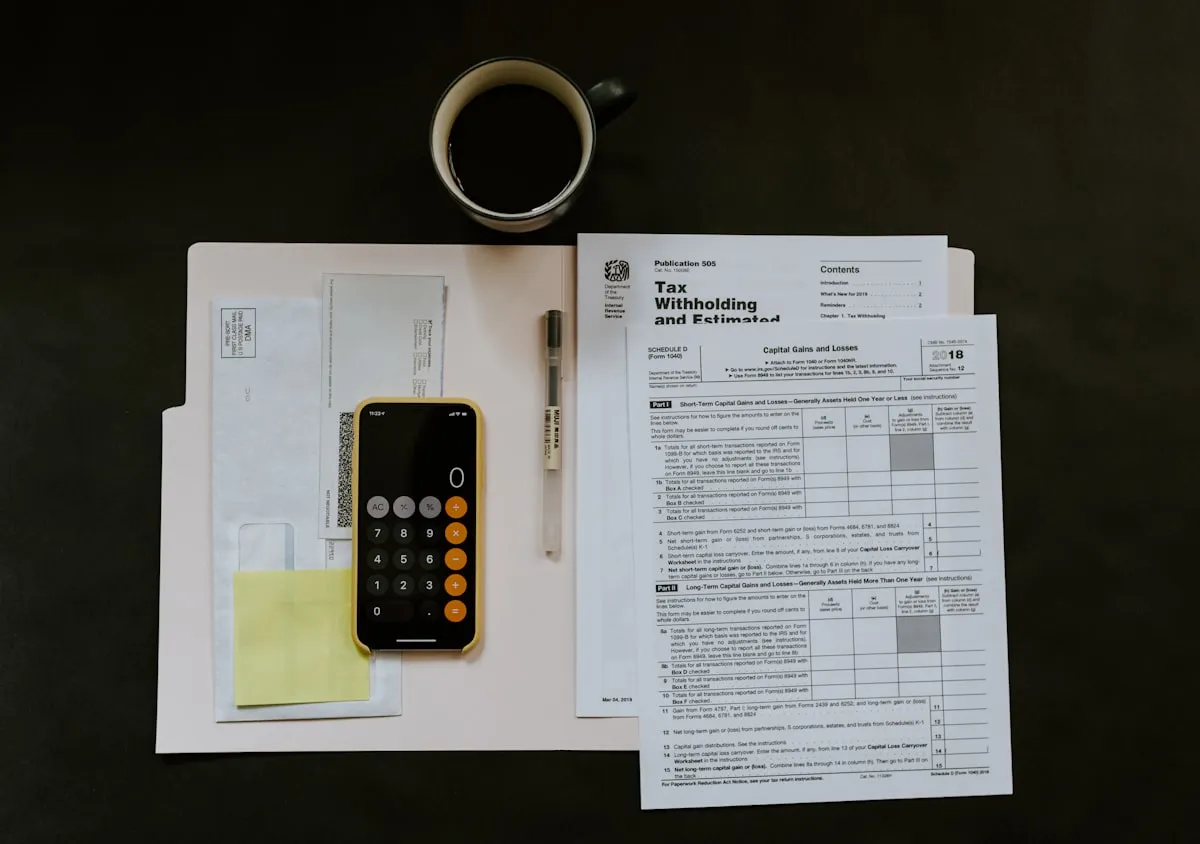
Under the Fair Work Act, employers are required to keep detailed records for all employees for at least seven years. These records must include the employee’s name and start date, the award that applies, the classification level, the rate of pay, hours worked each day, overtime hours, leave taken and accrued, and superannuation contributions.
Good record keeping isn’t just a legal requirement — it’s your protection if a dispute ever arises. If an employee claims they were underpaid and you don’t have records to prove otherwise, the burden of proof shifts to you as the employer. Courts and the Fair Work Ombudsman can draw adverse inferences from missing or inadequate records.
Modern rostering and payroll software makes record keeping much easier by automatically capturing hours worked, applying the correct rates, and storing records securely. This creates an audit trail that protects both you and your employees. If you want to check your own historical pay, our guide on how to conduct a payroll audit sets out a practical process.
Supporting compliance efforts in 2026 and beyond
Award compliance isn’t a one-time task — it requires ongoing attention as rates change annually, your team evolves, and the law itself is updated. The Fair Work system has seen significant changes in recent years, including reforms to casual employment, increased penalties for wage theft, and the criminalisation of deliberate underpayment.
The best approach is to build compliance into your regular business processes. Use rostering software that calculates award rates automatically rather than relying on manual calculations. Review employee classifications whenever roles change or annually as part of your regular HR processes. Stay informed about annual wage reviews and update your pay rates promptly when increases take effect.
Consider conducting regular self-audits of your payroll to identify and correct any errors before they become significant. Many businesses have discovered underpayments through proactive audits and have been able to rectify them quickly, avoiding the larger penalties and reputational damage that come with complaints or investigations. Getting award interpretation wrong is one of the most common — and costly — mistakes, so it’s worth reviewing the payroll award interpretation mistakes that most often catch businesses out.
Finally, create a culture of transparency around pay. Provide employees with clear pay slips that show how their pay is calculated, including base rates, penalty rates, and any allowances. When employees understand how they’re being paid, they’re more likely to spot errors early and raise them directly with you rather than escalating to external bodies.
By understanding the basics of how awards work, using the right tools, and maintaining good processes, you can pay your staff correctly while avoiding costly compliance mistakes. Your employees deserve to be paid fairly for their work, and getting it right benefits everyone.
Disclaimer
This article provides general information only and does not constitute legal advice. Pay rates, allowances, and conditions change over time. Always verify current rates using official Fair Work Ombudsman resources, including the Pay and Conditions Tool (PACT), before making employment or payroll decisions.
Frequently asked questions
What is the current minimum wage in Australia?
The 2026/27 national minimum wage is $26.44 per hour ($1,004.90/week), effective 1 July 2026 — a 4.75% rise announced by the Fair Work Commission in its June 2026 decision, which lifted modern award minimum rates by the same amount. Remember the minimum wage is a floor — your actual obligation depends on the modern award and classification that apply.
How do penalty rates work in Australia?
Penalty rates are additional payments for working outside ordinary hours. Saturday work typically attracts 125-150% of base rate, Sunday work 150-200%, public holidays 200-250%, and overtime is usually time and a half (150%) for the first 2-3 hours then double time (200%) thereafter. Rates vary by award — our guide on how to calculate penalty rates walks through the maths.
What is the difference between casual and permanent employees in Australia?
Casual employees receive a 25% loading on top of their base hourly rate but do not receive paid leave entitlements like annual leave, personal leave, or paid public holidays. Permanent employees receive these leave entitlements but no casual loading. Long-term casual employees may be able to convert to permanent employment through the employee choice pathway.
How do I know which award applies to my employees?
Use Fair Work’s free Pay and Conditions Tool (PACT) at www.fairwork.gov.au/pay-and-wages/pay-calculator to identify the correct award. Awards apply based on your business’s primary activity and the type of work employees perform, not job titles. Review the coverage clause in the relevant award and, if unsure, follow our guide to finding which award applies or seek professional advice.
How do you calculate an award pay rate?
Start with the base rate for the employee’s award classification, then layer adjustments in order: add the 25% casual loading if the employee is casual, apply any penalty rate for the day or time worked, add overtime for hours beyond ordinary limits, and finally add any applicable allowances. Because loadings and penalties interact differently across awards, a pay rate builder applies the correct rule to each shift automatically.
What are junior and apprentice pay rates?
Most awards pay employees under 21 a percentage of the adult classification rate, stepping up each year until they reach 100% at 21. Apprentices are paid a percentage of a trade rate that rises each year of the apprenticeship, and trainees are paid under the National Training Wage based on schooling completed. Because these are percentages of a base that changes every 1 July, they must be recalculated at each wage review — automating them in your payroll integration prevents missed step-ups.
Is there a minimum shift length under Australian awards?
Yes. Most awards set a minimum engagement — commonly 2, 3, or 4 hours’ pay per shift — even if the employee works fewer hours. The threshold varies by award and often differs for casuals, part-timers, and school-aged juniors. Rostering a shift shorter than the minimum is a common underpayment error, which is why rostering software that flags it before publishing is valuable.
How long must employers keep pay records?
Under the Fair Work Act, employers must keep employee pay and time records for at least seven years, including the applicable award, classification level, pay rate, hours worked, overtime, leave, and superannuation. If records are missing during a dispute, the burden of proof shifts to the employer, so a clear digital audit trail is your best protection — see our guide on how to conduct a payroll audit.