
Hospitality rostering software built for fast-paced venues
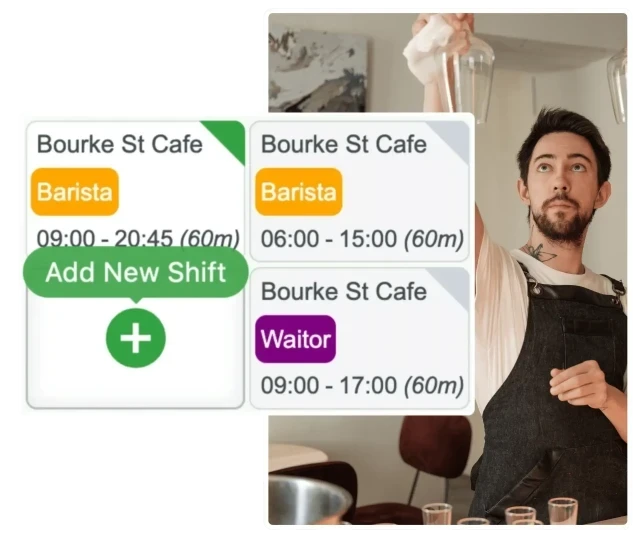
Rostering for hospitality is not the same as rostering for an office. Service peaks, casual teams, split shifts, and last-minute changes demand a different approach.
-
Built for split shifts and variable trading hours
-
Designed for casual-heavy workforces
-
Made for venues where demand changes daily




Why hospitality rostering is uniquely demanding

Demand shifts daily, staff availability changes weekly
Hospitality venues operate where demand can shift dramatically within hours. A sunny Saturday brings twice the covers of a rainy one. A local event fills tables unexpectedly.
Most teams are built around casual and part-time workers with constantly shifting availability — study commitments, second jobs, family responsibilities. Add split shifts, late-night penalty rates, and last-minute callouts, and you have a rostering environment that demands real flexibility.
Rostering challenges unique to hospitality
These factors combine to make hospitality scheduling fundamentally different from other industries.
Service peaks
Breakfast, lunch, and dinner rushes create dramatic staffing swings throughout the day.
Split shifts
Staff work lunch, leave for hours, then return for dinner — standard practice in hospitality.
Junior & adult mix
Different pay rates and working hour restrictions for staff across age brackets.
Weekly availability changes
Casual staff availability shifts constantly due to study, second jobs, and life commitments.
Penalty rate impact
Public holidays and late nights dramatically increase labour costs.
Last-minute changes
Callouts, no-shows, and demand spikes happen weekly — gaps need filling fast.
Why hospitality rosters differ from other industries

Standard scheduling fails in hospitality
Office workers arrive at the same time each day. Hospitality staff arrive when customers do — 6am for a breakfast cafe or 10pm for a nightclub. Flexibility matters more than structure.
Labour cost mistakes carry higher consequences with single-digit margins. Overstaffing a quiet Tuesday or understaffing a busy Saturday shows up immediately in the weekly numbers.
Rostering across different hospitality venues
Each venue type faces distinct rostering challenges shaped by trading hours, customer patterns, and workforce composition.
Restaurants & cafes
Split shifts across breakfast, lunch, and dinner services. Short, intense trading windows require precise staffing. Casual-heavy teams with variable availability.
Bars, pubs & clubs
Late-night trading means penalty rates accumulate throughout shifts. RSA compliance is mandatory. Large casual pools handle weekend rushes with unpredictable patron numbers.
Quick service & franchises
Repeatable patterns across multiple locations. Junior-heavy workforces with specific hour restrictions. High turnover demands efficient processes and consistency.
Rosters that reflect who's actually available

No more rostering people who can't work
Casual hospitality staff have unpredictable lives — uni timetables change, second jobs shift, family needs evolve. Chasing availability via text and spreadsheets wastes hours every week.
When availability stays current, rosters get built around reality instead of guesswork. Fewer rejected shifts, fewer last-minute scrambles, less time wasted on people who were never going to say yes.
Gaps filled in minutes, not hours

When callouts happen, coverage happens faster
A bartender calls in sick two hours before Friday night service. The old way: frantic phone calls, unanswered texts, and hoping someone picks up.
Open shifts reach the right people immediately — staff who are available, qualified, and actually want the hours. No more working through a contact list hoping for a yes.
Know the cost before you publish

Informed decisions instead of expensive surprises
Hospitality margins are tight. Overstaffing a quiet Tuesday or scheduling too many penalty-rate shifts on Sunday can wipe out the week's profit. Most managers only see the damage after payroll.
With labour budgeting visibility, rostering decisions become financial decisions. Base rates, penalties, and projected totals — visible before the roster goes out, not after the pay run.
Staff flexibility without the confusion

Swaps happen cleanly — everyone knows who's working
Hospitality staff often need to swap shifts — a better offer came up, study deadlines shifted, or life got in the way. Managing swaps via group chat creates confusion and compliance risk.
Proper shift swap processes mean flexibility without chaos. Swaps only happen between qualified staff, managers stay informed, and the roster always reflects who's actually working.
How rostering connects to hospitality operations
Rosters flow through to payroll and profitability
Every shift scheduled flows through to hours worked, which determines payroll costs, which affects weekly profitability. A roster built without visibility into these impacts is a roster built blind.
Availability management and open shifts help hospitality teams adapt quickly. Labour budgeting ensures decisions align with targets. Explore RosterElf's rostering software to see how these pieces work together.
Compliance and awards in hospitality rostering

Penalty rates, junior rates, and public holidays
The Hospitality Industry Award governs pay and conditions with penalty rates for evenings, weekends, and public holidays. Junior rates add another layer with different base rates and shift restrictions for younger employees.
Public holiday penalties in hospitality are among the highest in any industry. Understanding these impacts before publishing rosters is essential. See the hospitality award rates guide for detailed compliance information.
Why hospitality businesses use industry-specific rostering
Rostering built for hospitality delivers measurable operational improvements.
Fewer staff disputes
Rosters that reflect availability and communicate clearly reduce disagreements.
Faster gap filling
Fill shifts and communicate changes in minutes, not hours of phone calls.
Labour cost visibility
See the cost of decisions before making them, not after payroll runs. Track costs with <a href="/industries/hospitality/analytics">analytics</a>.
Better staff retention
Rosters that respect availability make hospitality jobs more attractive.
Explore hospitality workforce solutions
Rostering is one part of managing a hospitality workforce. Explore related solutions built for the industry.
See how hospitality rostering works in practice
Book a hospitality-focused demo or start a free trial built for restaurants, cafes and clubs.
Real support from people who understand your business
At RosterElf, support isn't a ticket system — it's part of the product. Our Australian-based team helps you set up correctly, understand award rules, and stay compliant as your business changes. No scripts. No offshore handoffs. Just real help when you need it.
-
Guided setup and onboarding
-
Award and payroll questions answered
-
Ongoing help as your team grows

 5.0 average rating
 Rated 5.0 by Australian businesses
Hospitality rostering questions
- Hospitality demand fluctuates daily based on weather, events, and seasons. Most staff are casual with variable availability, shifts are often split across service periods, and penalty rates change throughout the day. These factors combine to make hospitality rostering uniquely complex. New to rostering? Learn the fundamentals in our How to create a roster guide covering spreadsheets and software methods.
- Restaurants and cafes deal with short trading windows, split shifts for breakfast-lunch and dinner service, casual-heavy teams with constantly changing availability, and the need to match staffing precisely to covers and bookings.
- Hospitality penalty rates for evenings, weekends, and public holidays significantly impact labour costs. Rostering decisions must balance adequate coverage with the financial impact of penalty-heavy shifts, especially for late-night and holiday trading.
- Bars and clubs operate late into the night with penalty rates accumulating throughout shifts. RSA compliance is critical, casual staff pools are larger, and last-minute changes are more frequent due to unpredictable patron numbers.
- QSR and fast food venues often roster large teams of junior and casual workers with high turnover. Consistent patterns across locations, clear role assignments, and maintaining a pool of trained staff ready to fill gaps are essential.