

Policies staff have actually read
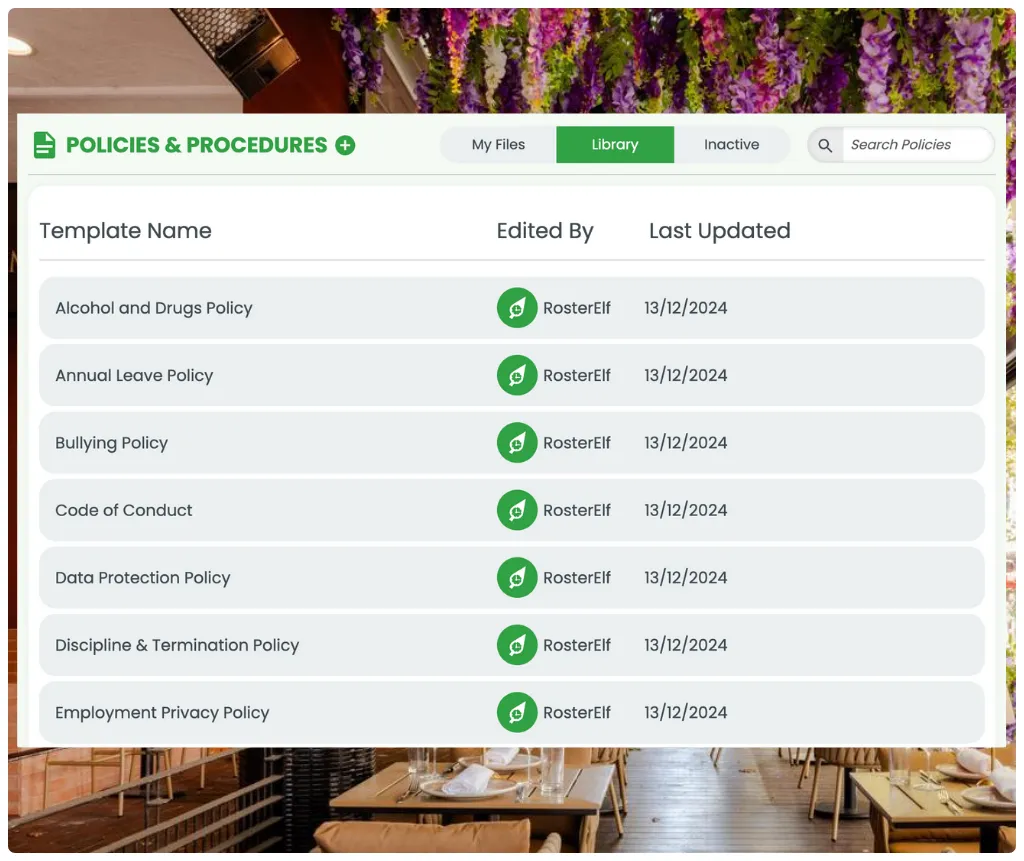
A policy you cannot prove someone received is a policy you cannot rely on. Issue policies through the app, capture a dated acknowledgement from each employee, and keep every version.
-
Dated acknowledgement against each individual
-
Version history, so you can show what applied when
-
New starters picked up automatically at onboarding




In New Zealand, how you change a policy matters
The duty of good faith runs through the whole employment relationship, and it is active rather than passive: parties must not mislead or deceive each other, and where a decision will affect employees they should have access to the relevant information and a real opportunity to comment before it is made.
Consult, then issue
A change proposed, discussed and then confirmed is defensible. A change that appears in the app one morning is not.
Keep the old version
If conduct in March is questioned in October, the version that matters is the one in force in March — and the acknowledgement that goes with it.
General information, not legal advice.
What shift-based businesses usually hold
Health and safety
Developed with workers, not issued to them — HSWA 2015 ss58–59
Code of conduct
What is expected on shift, and what happens when it is not met
Bullying and harassment
WorkSafe treats bullying as a work-related health risk
Drug and alcohol
Testing regimes need an agreed, consistently applied policy
Privacy
How employee information is collected, used and secured — Privacy Act 2020
Leave and absence
How to notify, and what evidence is asked for
Policies are issued as part of onboarding, so a starter accepts the current set before their first shift rather than being added to a distribution list nobody reviews.
Sent is not the same as read
- Who has accepted the current version, and who has not
- The date each person accepted it, held against their record
- Which version was in force on any past date
- Outstanding acknowledgements visible before you publish the roster
Explore related features
Discover other RosterElf features that work great together
Know exactly who accepted what
Issue policies through the app and keep a dated acknowledgement and version history against every employee.
Policy and documentation guides
Moving policies online, and keeping the paperwork defensible.

Digital HR policies and contracts explained
Moving policies and agreements online, and recording who accepted what.
Read article
HR documentation accuracy: what auditors look for
The gaps inspectors find first, and how to close them.
Read article
HR processes that break as teams scale
Which processes fail past 20 staff — onboarding, records and approvals first.
Read articlePolicy management FAQ
- It depends on whether the policy is part of the employment agreement. A policy incorporated into the agreement is a term of it and cannot be varied without the employee’s agreement. Even where a policy sits outside the agreement, the duty of good faith in section 4 of the Employment Relations Act 2000 means employees should be consulted about a change that affects them, and given a genuine chance to respond before it is decided.
- Effectively, yes. Sections 58 and 59 of the Health and Safety at Work Act 2015 require a PCBU to engage with workers on matters that affect their health and safety, and to have practices that give them reasonable opportunities to participate. A policy written in an office and emailed out does not meet that on its own.
- Sending it is not the same as being able to show it was received and read. If a policy is ever relied on in a disciplinary process, the question asked is whether that employee knew about it — and a distribution list does not answer that. A dated acknowledgement against the individual does.
- Yes. Health and safety duties are owed to every worker regardless of their agreement type, and the duty of good faith applies to all employment relationships. In a shift-based business, casuals are often the people most affected by policies on notification and site safety.