

Written employment agreements, signed before the first shift
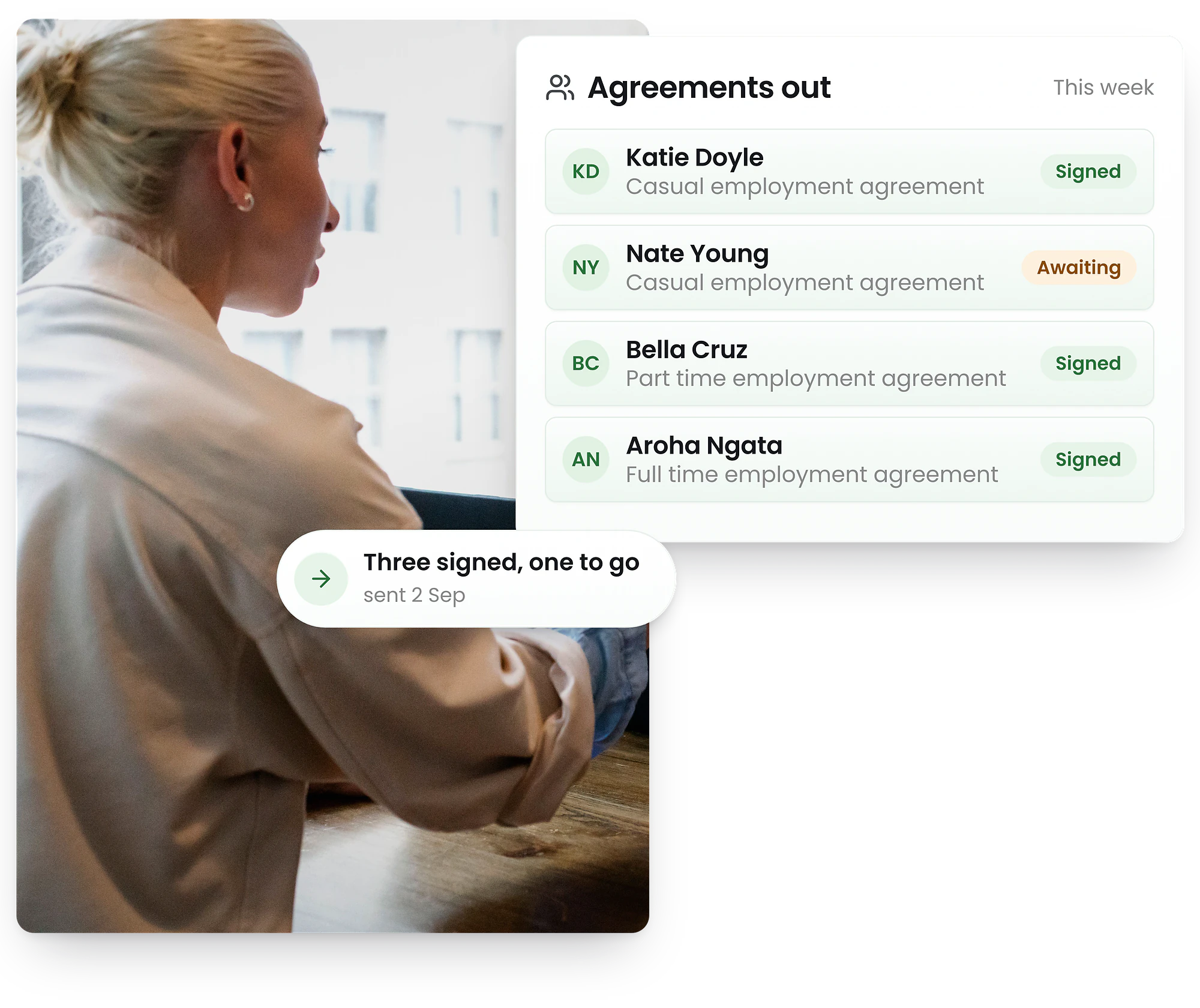
Every New Zealand employee must have a written individual employment agreement under section 65 — including casuals. Send it, let them take advice on it, and hold the signed copy against their record.
-
Required for every employee, with no casual exception
-
Sent before work starts, with time to seek advice
-
Signed copy retained and available to the employee on request




What a New Zealand employment agreement must contain
The Act sets a floor for what goes in the document. A template that omits any of these is not a compliant agreement, however professional it looks.
The names of the employee and employer
And the position or a description of the work to be performed.
An indication of where the work is to be performed
Which site, or the arrangement if the employee works across several.
Agreed hours of work
Where hours are agreed, they must be recorded (s67C). Where they are not, the agreement must indicate the arrangements for when the employee will work.
The wages or salary payable
And how they are calculated, including any allowances or overtime arrangements.
A plain-language explanation of how to resolve a problem
Including a reference to the 90-day period for raising a personal grievance under s114.
An employee protection provision
Covering what happens to the employee if the business is restructured or sold.
General information, not legal advice. Employment New Zealand publishes an agreement builder at employment.govt.nz.
The step most employers skip
The employer must give the employee a copy of the intended agreement, advise them they can take independent advice on it, and allow a reasonable opportunity to do so. That is a sequence, not a formality — and it is why an agreement produced on day one, signed on the spot, is the version most likely to be challenged.
Send the intended agreement
Emailed as part of onboarding, before the start date.
Allow time for advice
A reasonable opportunity to take independent advice on the terms.
Sign and retain
The signed copy is held against the employee record.
An audit trail a filing cabinet cannot produce
Evidence of the process
When the agreement was sent, opened and signed — not just that a signature exists.
One current version
Variations are recorded against the employee, so you can show the terms in force on any date.
Available on request
The employee can open their own agreement from the app, which is how the law expects it to be available.
Related support articles
Step-by-step guides to help you get started
Manage and edit employment contracts in HR Hub
Create a contract, merge employee details and send it for signature.
HR Hub View guideEdit contracts and policies in HR Hub
Update a template without breaking the versions already signed.
HR Hub View guideTrack and maintain staff contracts
See who has signed, who has not, and what is stored against each employee.
HR Hub View guideFind a policy acknowledgement date
Retrieve exactly when an employee acknowledged a policy, for an audit.
HR Hub View guideExplore related features
Discover other RosterElf features that work great together
Get every agreement signed before the first shift
Send agreements as part of onboarding and hold the signed copy against the employee record.
Employment agreement guides
Practical reading on getting agreements and HR paperwork right.

Digital HR policies and contracts explained
Moving policies and agreements online, and recording who accepted what.
Read article
Employee lifecycle records: from onboarding to exit
What to record at each stage of employment, and what to keep afterwards.
Read article
HR documentation accuracy: what auditors look for
The gaps inspectors find first, and how to close them.
Read articleEmployment agreement FAQ
- Yes. Section 65 of the Employment Relations Act 2000 requires a written individual employment agreement for every employee. There is no exception for casual employees, part-timers, fixed-term staff or family members. The Labour Inspectorate can seek a penalty where one has not been provided.
- Before employment starts. The employer must give the employee a copy of the intended agreement, tell them they are entitled to seek independent advice on it, and give them a reasonable opportunity to do so. Handing someone an agreement to sign on their first shift does not satisfy that.
- Yes. The employer must retain a signed copy, or the current terms of the intended agreement, and provide a copy to the employee on request. This sits alongside the wage and time record obligations in s130.
- Yes. What the law requires is that the agreement is in writing and that the employee had a genuine opportunity to consider it and seek advice. An electronic signature with an audit trail of when the agreement was sent, opened and signed evidences that better than an undated paper copy in a drawer.